macro / ch 11
11.1Economic growth
The meaning and significance of economic growth
- economic growth refers to an increase in real GDP, or the real quantity of goods and services produced over a period of time(typically a year), and is usually expressed as
- a percentage change in real GDP over a period of time
- a percentage change in real GDP per capita over a period of time
- Calculating economic growth
-


Short-term growth versus long-term growth
- Understanding growth using the AD-AS model
- increase in AD -> short-term growth
- increase in SRAS -> short-term growth
- increase in LRAS -> long-term growth
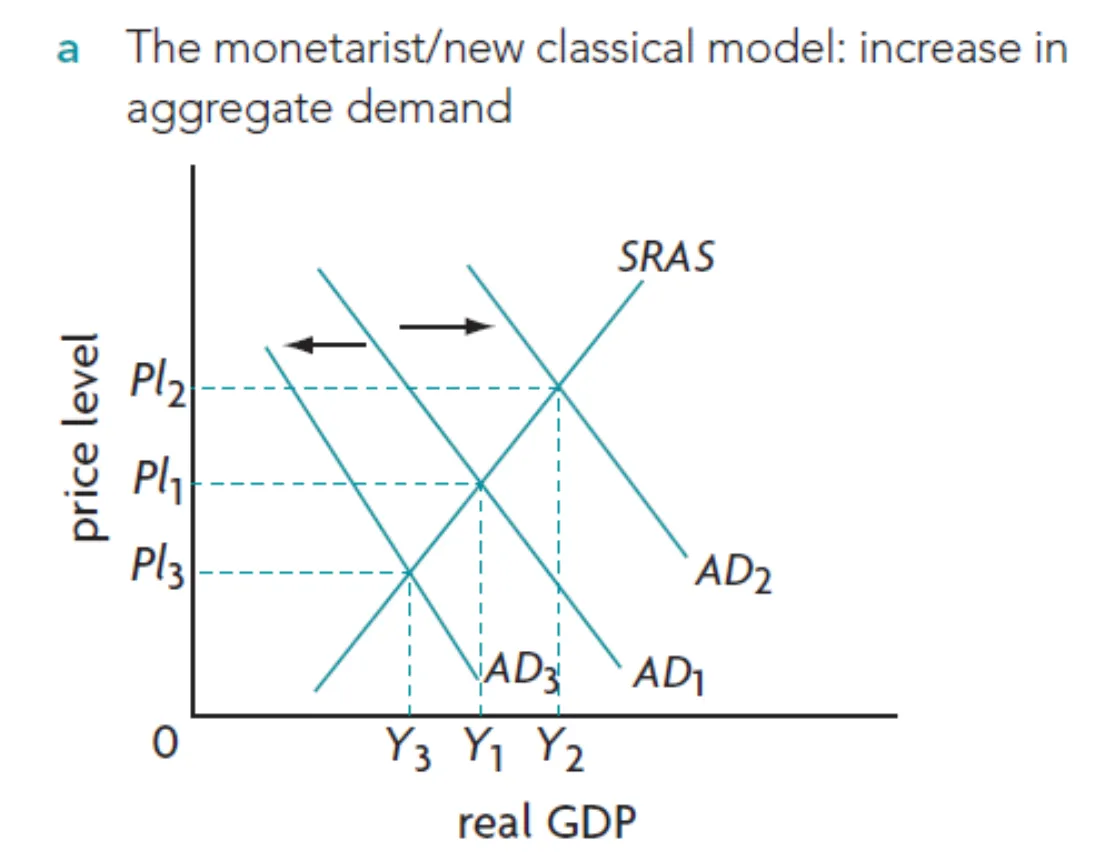
- Short-term growth: increase in AD
-
-
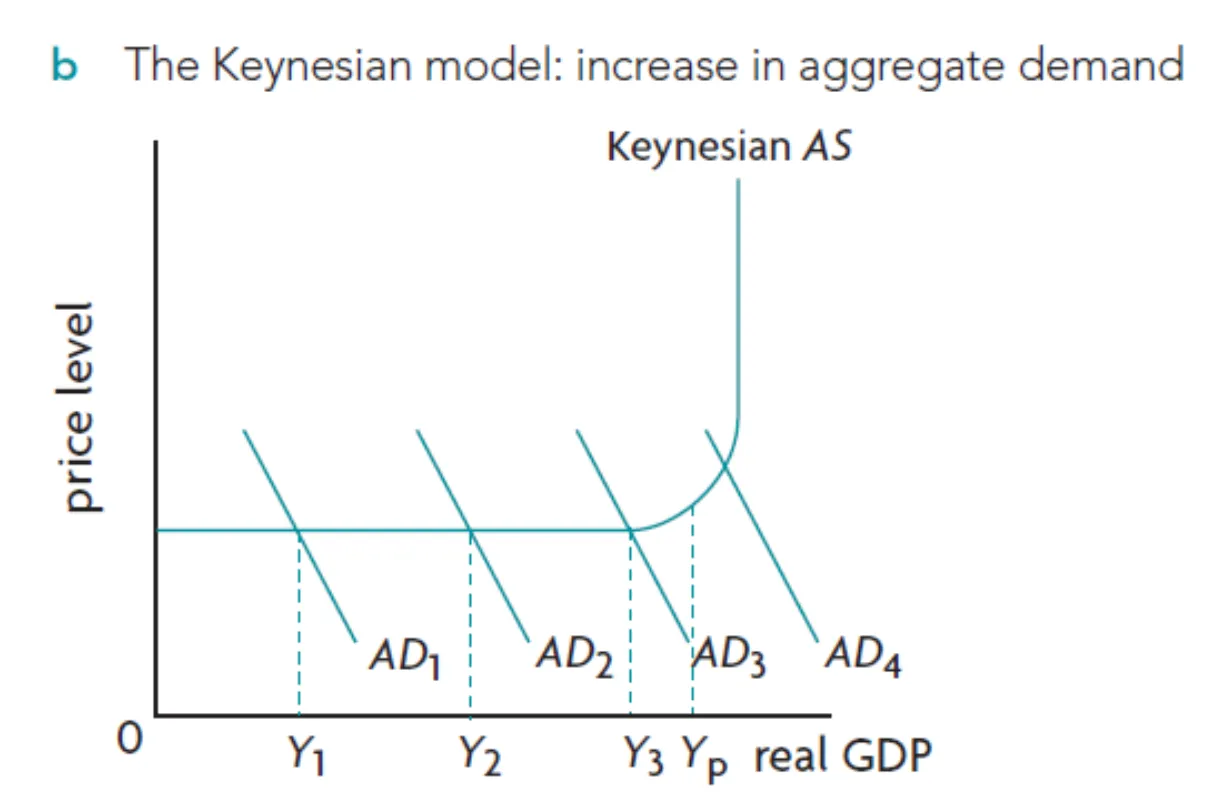
- rightward shift of AD from AD1 to AD2
- real GDP increase from Y1 to Y2
- no impact on the potential output
-
- Short-term growth: increase in SRAS
-
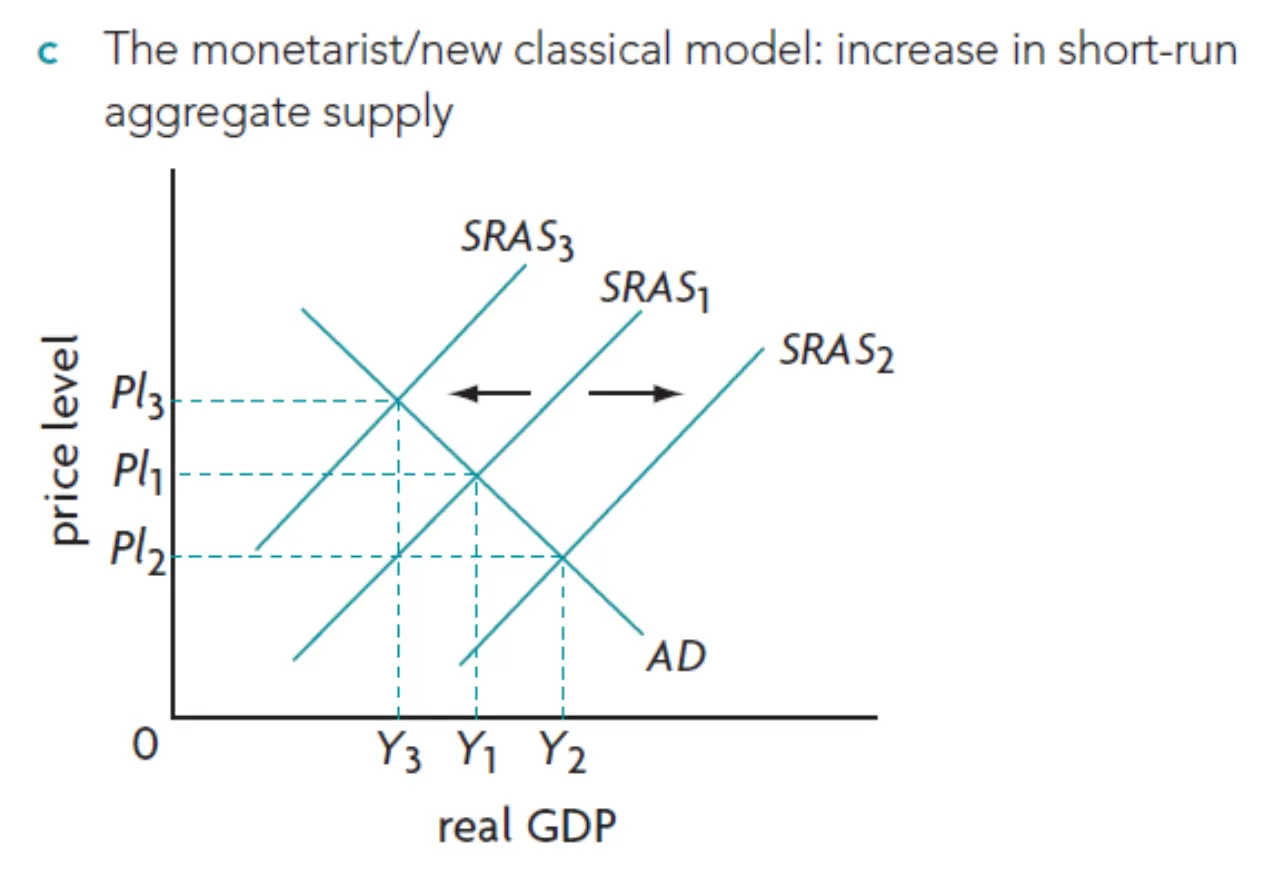
- short-term growth can also be caused by an increase in SRAS, illustrated by a rightward shift of SRAS from SRAS1 to SRAS2
- causing real GDP to rise from Y1 to Y2
- possible causes of this
- fall in prices of factors of production (labour and non-labour resources)
- increases in subsidies
- positive supply shocks
-
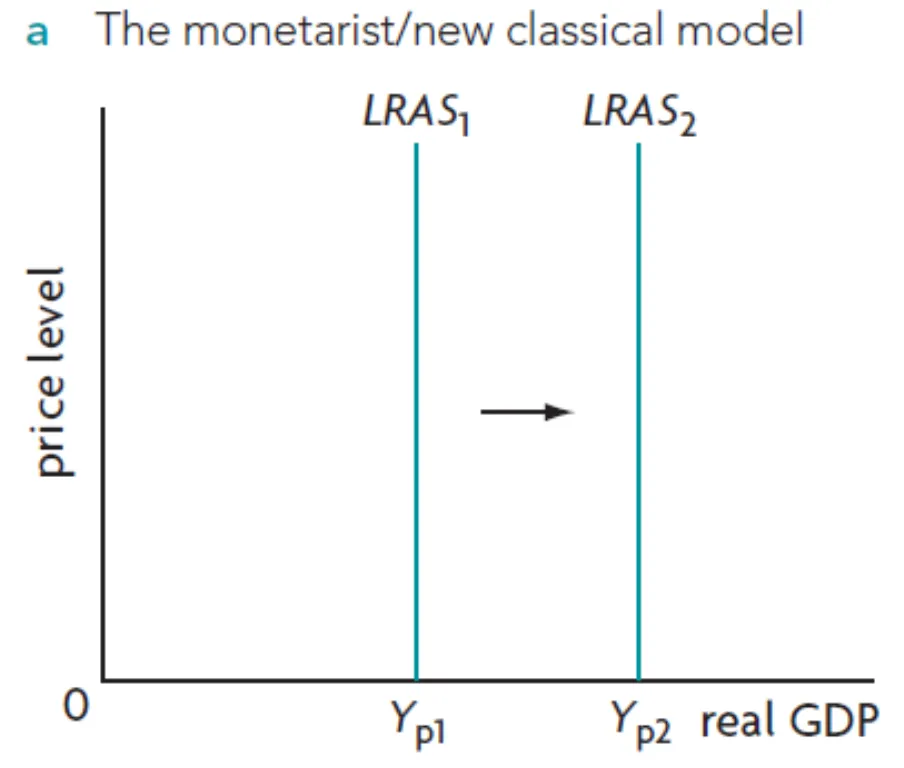
- Long-term growth: increase in LRAS
-
-
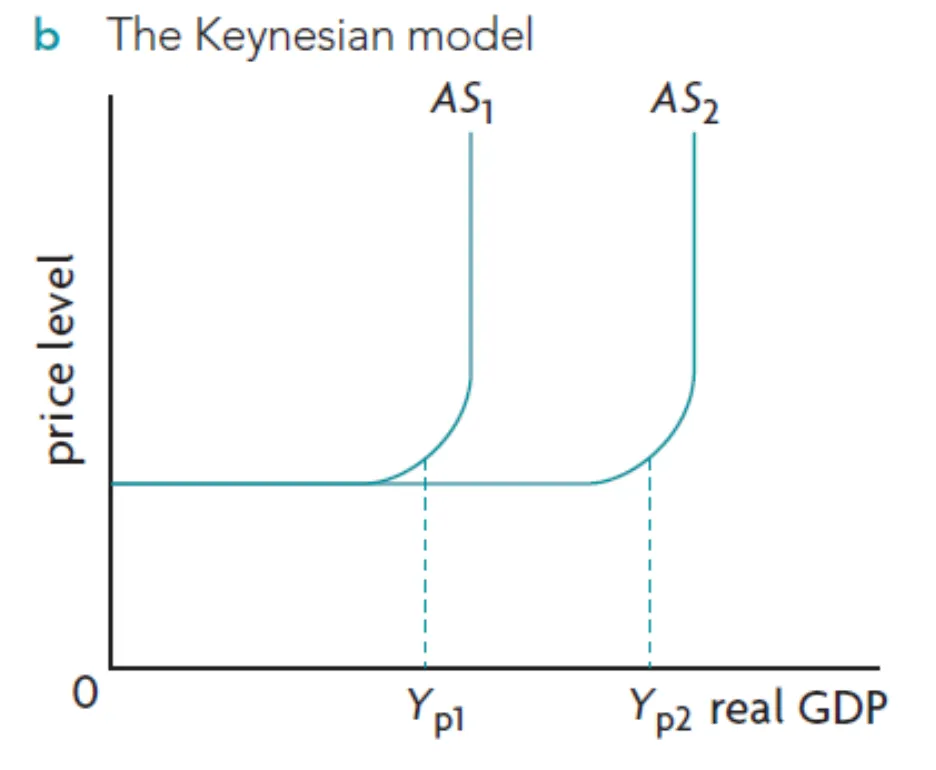
- increase in LRAS (increase in future productive capacity) -> rightward shift of LRAS -> potential output/GDP increases from Yp1 to Yp2
- possible causes of long-term growth
- Increase in quantity/quality of factors of production
- labour
- 人口增长
- 移民增加劳动力
- 教育、training 提高 skills(human capital)
- workers 更 productive
- capital
- 更多机器、工厂、基础设施 investment
- 更好的 transport/network
- productive capacity 上升
- land/natural resources
- 新能源发现
- 更高效利用资源
- output potential increase
- entrepreneurship
- 更多创新企业
- better management
- resources allocated more efficiently
- labour
- Technology improvement
- Technological progress
- automation
- AI
- more efficient production methods
- 同样 input → 更多 output
- productivity ↑ → potential output ↑ → LRAS right
- Technological progress
- Increase in quantity/quality of factors of production
-
- The AD-AS model, growth and the business cycle
- Business Cycle Overview
- The economy operates at full employment or potential GDP when there is no inflationary or deflationary gap.
- Short-Term Economic Growth
- Contraction phases correspond to negative growth, with real GDP decreasing.
- Drivers of upward phases:
- Mainly increases in aggregate demand (AD)
- Lesser extent: increases in short-run aggregate supply (SRAS)
- Drivers of downward phases:
- Mainly decreasing AD
- Lesser extent: decreasing SRAS
- Understanding growth using the production possibilities model
- Short-term growth: growth in actual output
-
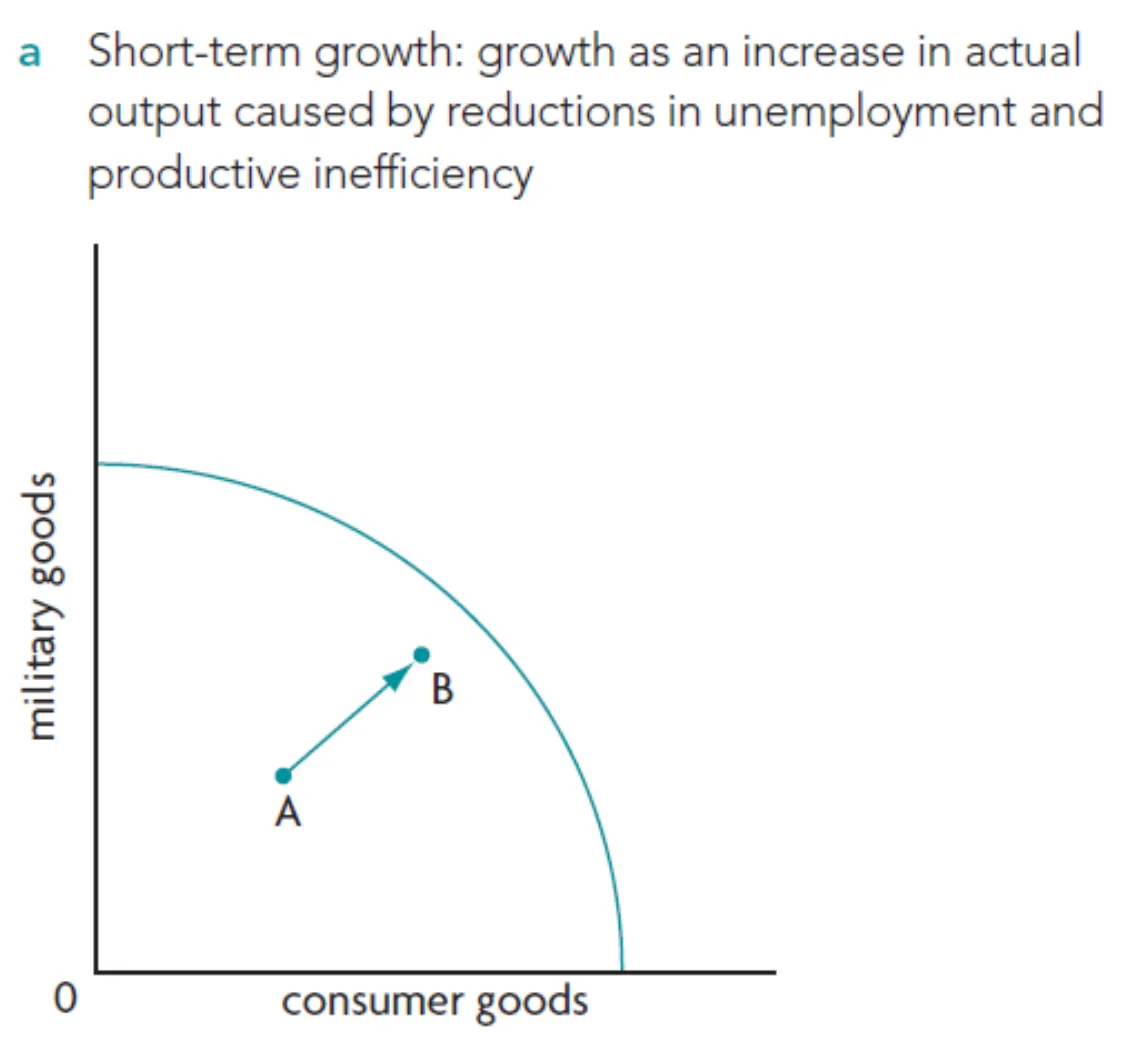
- PPC shows the combinations of maximum output that can be produced by an economy with fixed resources and technology, provided that there is full or maximum employment of resources and efficiency in production
- Maximum employment in PPC means that all resources are employed to the fullest extent and there is zero umemployment
- reducing unemployment and improving the efficiency of resource use can move from point A to B
-
- Long-term growth: growth in production possibilities
- indicated by rightward shift of PPC
-
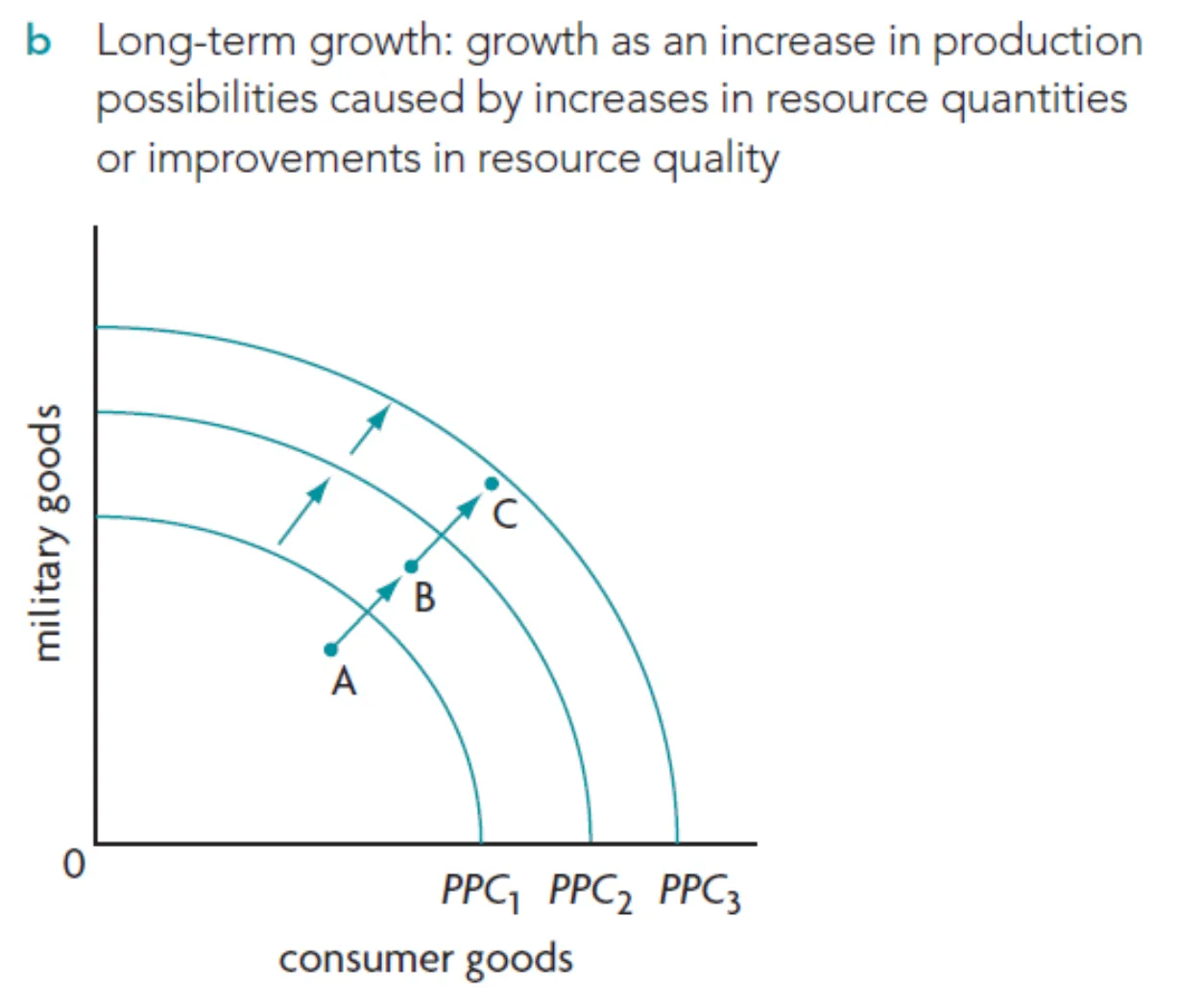
- it is often caused by
- increase in the quantity of resources (factors of production) in the economy
- improvements in the quality of resources (more educated labour, or improved physical capital through technological change)
- Short-term growth: growth in actual output
Consequences of economic growth
- Impact of economic growth on living standards
- Income distribution matters: When a larger share of income goes to poorer households, economic growth more effectively improves living standards, because these households experience the greatest deprivation. If growth bypasses them, overall improvements are limited.
- Household spending: The more households spend on essentials like food, education, and healthcare, the more living standards improve.
- Income controlled by women: Greater control of income by women tends to amplify the positive impact of growth on living standards.
- Government spending on merit goods: Allocating more government budget to education, healthcare, and infrastructure (like clean water and sanitation) strengthens the benefits of growth.
- NGO contributions: Effective non-governmental organizations targeting the poor increase the impact of growth on higher living standards.
- Impact of economic growth on the environment
- Negative impacts of economic growth on the environment
- Rapid economic growth often leads to unsustainable use of resources, especially common access/common pool resources.
- Growth may increase:
- Air pollution (e.g., urban pollution from industrialisation)
- Soil degradation (erosion, waterlogging, overgrazing)
- Deforestation
- Loss of biodiversity
- Growth based on fossil fuels creates negative production externalities (pollution from firms).
- Rising disposable incomes → higher consumption of:
- Cars
- Air conditioning
- Air travel
→ creates negative consumption externalities.
- Lack of pricing for common resources encourages overuse and environmental damage.
- Negative impacts of economic growth on the environment
- Impact of economic growth on income distribution
- Relationship between economic growth and income distribution
- There is no clear relationship between GDP per capita growth and income distribution.
- Research findings are inconclusive:
- Some countries experienced greater inequality first, then improvement.
- Some experienced the opposite pattern.
- Others showed little or no clear change.
- Impact depends on:
- Country-specific conditions
- Government policies
- Type of growth strategy pursued
- Examples of different outcomes
- Many countries in Latin America started with high income inequality, which remained persistent despite growth.
- Some East Asian economies (e.g., South Korea):
- Had relatively equal income distribution before rapid growth.
- Maintained equality during rapid growth (1970s–1980s).
- Invested heavily in human capital (education and skills), allowing broader participation in growth benefits.
- Relationship between economic growth and income distribution