macro / ch 12
12.5Policies to reduce income and wealth inequalities and poverty
Direct taxes
- are taxes paid directly to the government authorities by the taxpayer
- personal income taxes
- most important source of government tax revenue
- involves tax paid by households or individuals in households
- they are paid on all forms of incomes, including wages, rental income, interest income and dividends
- corporate income taxes
- corporations are businesses that have formed a legal body called a ‘corporation” that is legally separate from its owners
- 公司在法律上和老板本人是分开的
- corporate income taxes are taxes on the profits of corporations
- corporations are businesses that have formed a legal body called a ‘corporation” that is legally separate from its owners
- wealth taxes
- taxes on the ownership of assets
- 房子
- 股票
- 银行存款
- 土地
- 有价值的投资
- property taxes
- based on the value of property owned
- inheritance taxes
- based on the value of property inherited
- taxes on the ownership of assets
- The revenue collected from the taxes is paid into the government’s budget and is used to finance a broad variety of government expenditures. In contrast to these, there is an additional form of direct taxation:
- Social insurance contributions or payroll taxes. These taxes are paid by workers and their employers (who pay on behalf of their employees). The revenues from these taxes are not paid into the government’s budget, but rather into specific funds, and are used to finance specific expenditures, such as pensions (退休金), social insurance and health care (in some countries).
Indirect taxes
- Indirect taxes are taxes imposed on expenditure on goods and services, collected by firms and pay to the government
- general expenditure taxes/sales taxes
- taxes on spending or sale of goods and services
- US: fixed percentage of the retail price of goods and services
- excise taxes
- in contrast to general expenditure taxes/sales taxes, excise taxes are not ‘general’
- paid on specific goods or services
- such as cigarettes and petrol (gasoline)
- tariffs
- a type of tax applied on imports of foreign goods or services into a country
- 1. keep imports out of the country by making them more expensive to consumers
- 2. raise tax revenues
The principles of proportional, progressive, and regressive taxation
-
the fraction of income paid as tax is referred to as tax rate
-
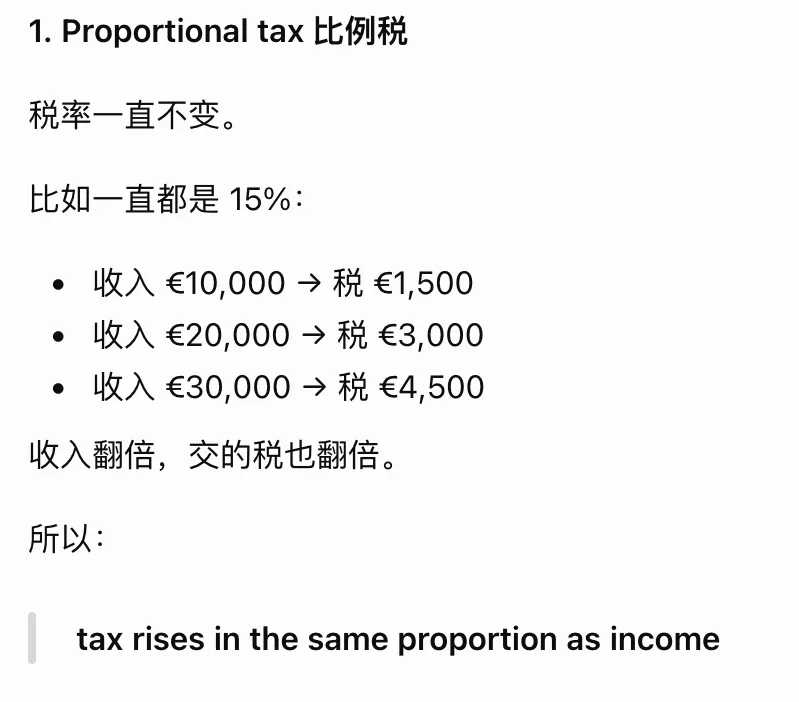
proportional taxation
-
as income increases, the fraction of income paid as tax remains constant; there is a constant tax rate
-
-
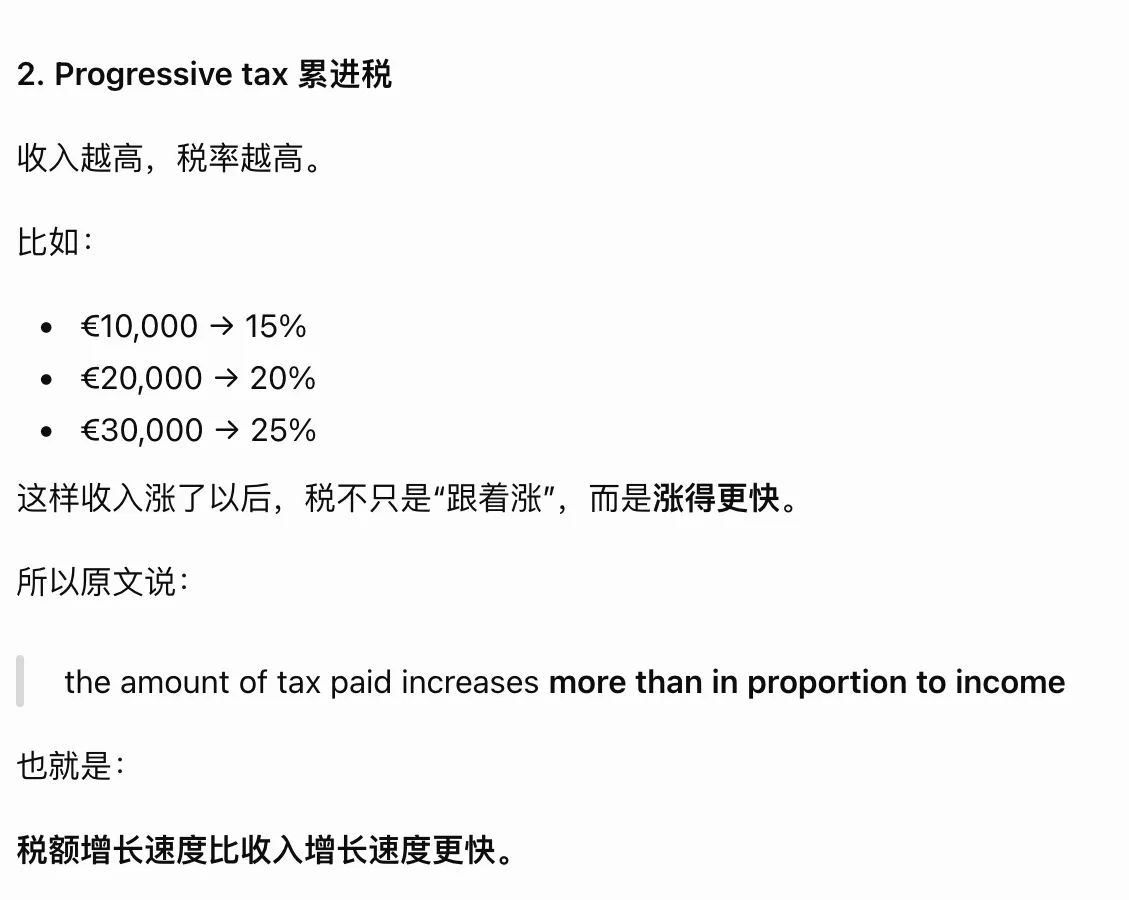
progressive taxation
-
as income increases, the fraction of income paid as tax increases; there is an increasing tax rate
-
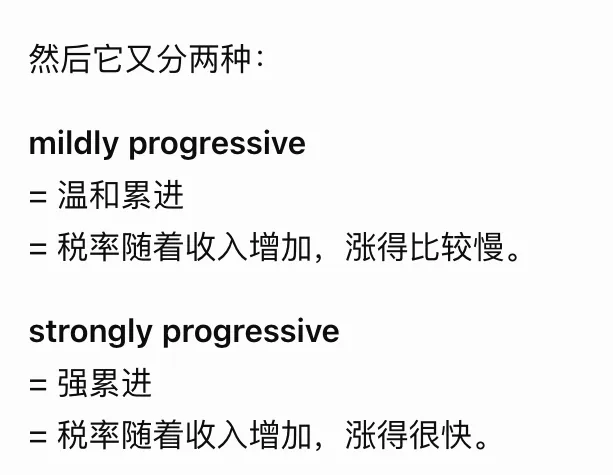
- The more progressive a tax system, the more equal the after-tax distribution of income becomes.
-
-
-
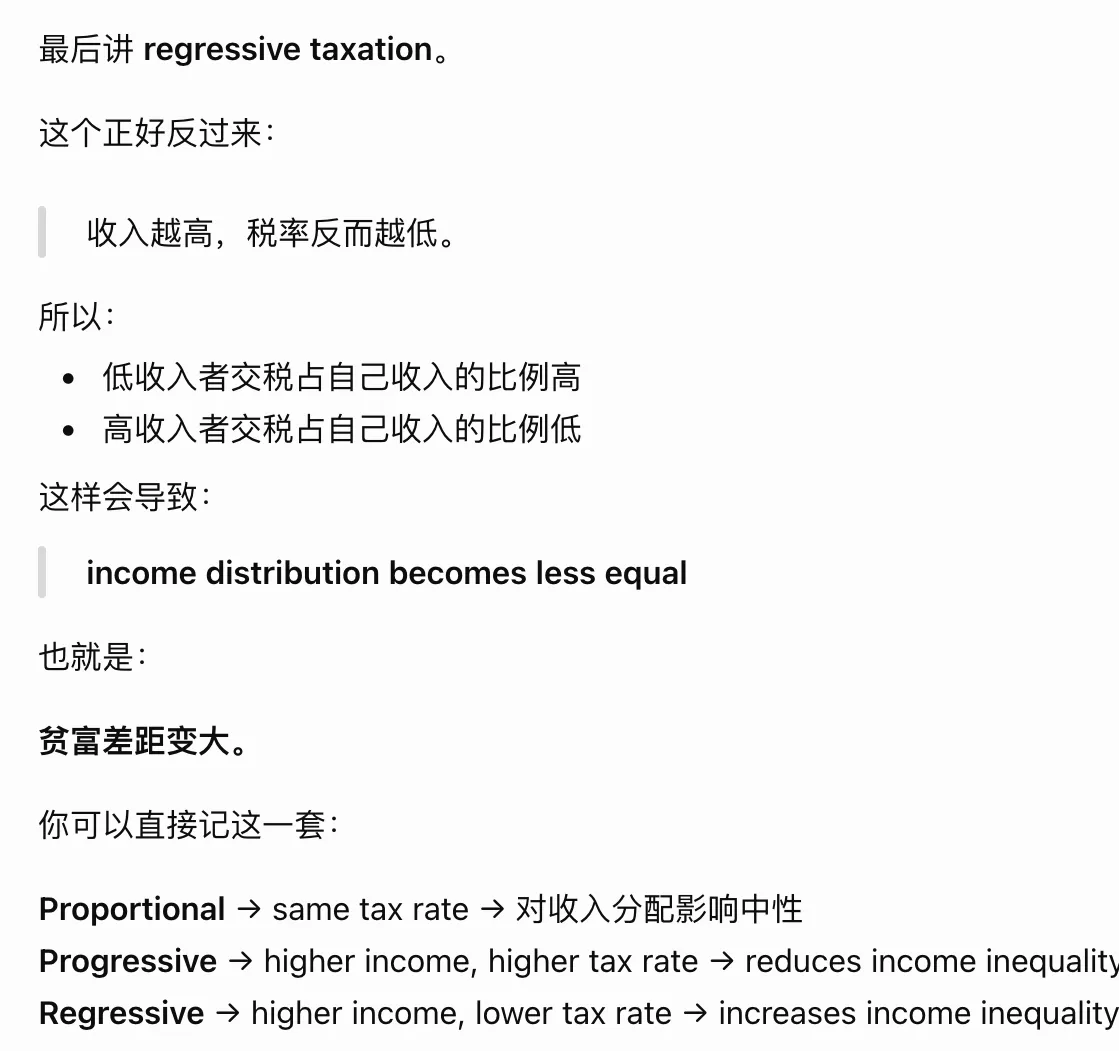
regressive taxation
-
as income increases, the fraction of income paid as tax decreases; there is an decreasing tax rate
-
-
why indirect taxes are regressive
- Indirect taxes are regressive because lower-income people pay a larger proportion of their income in indirect taxes than higher-income people when buying the same good or service.
Evaluating taxes as a policy for redistribution
-
-
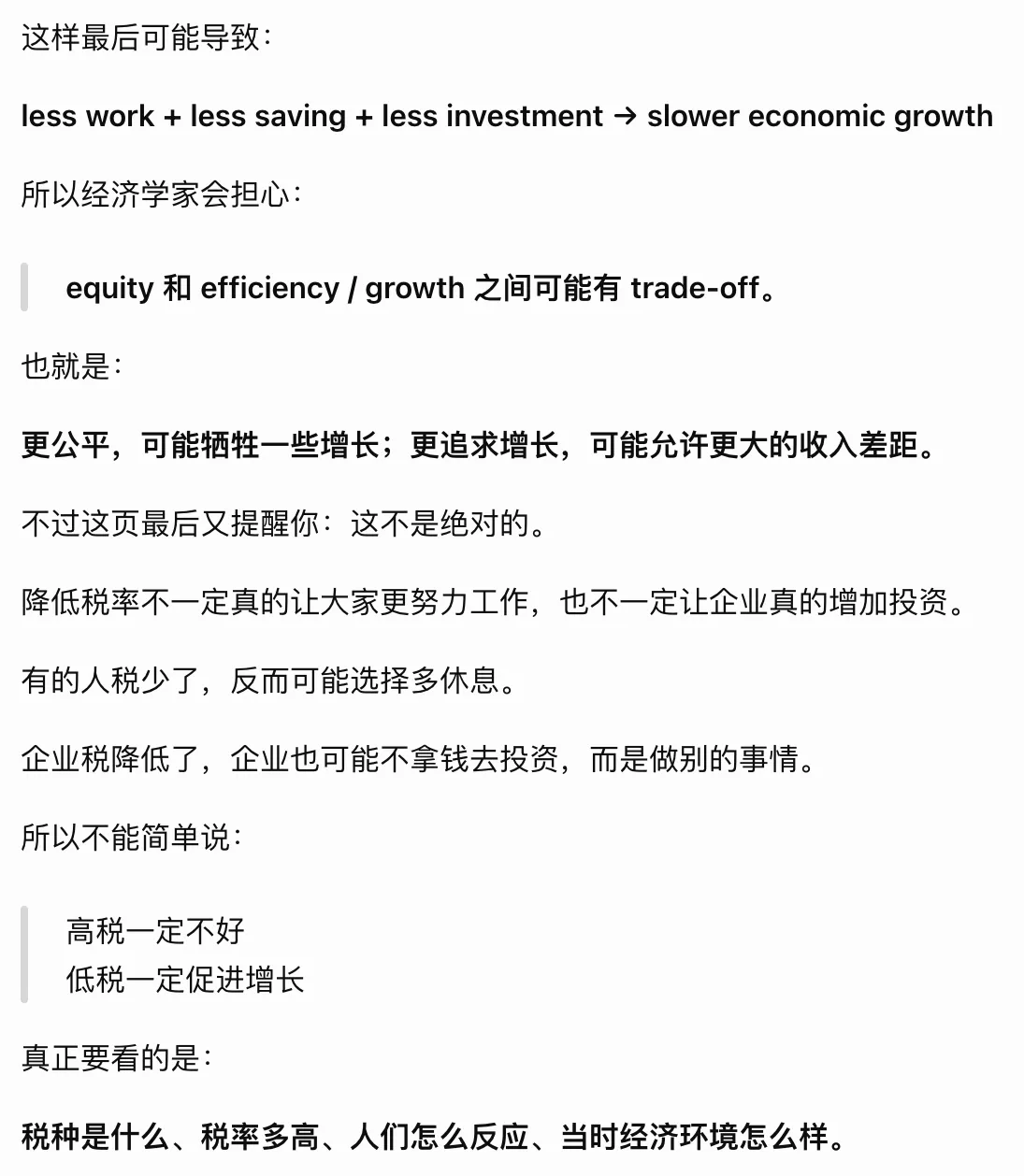
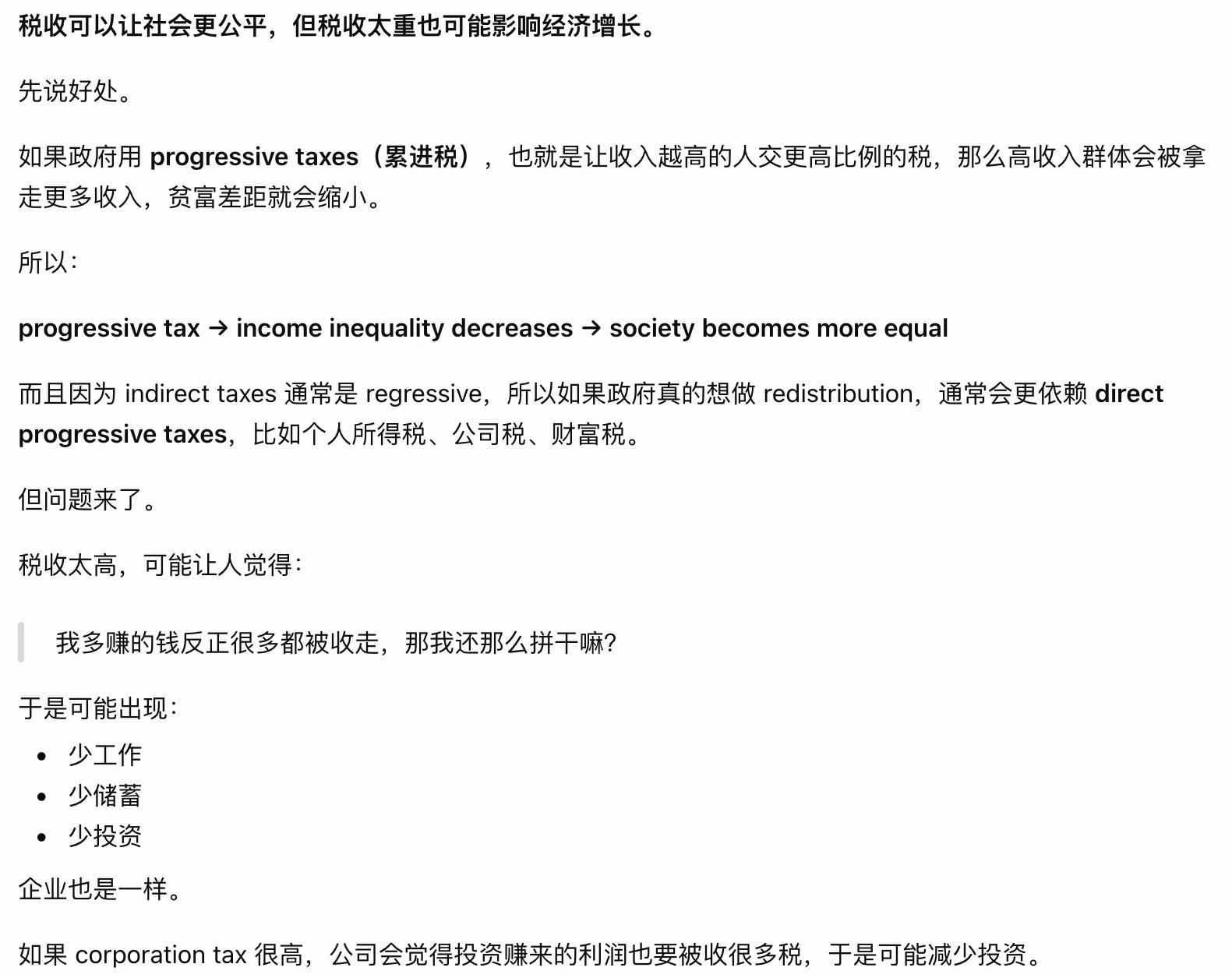
- Progressive taxation can reduce income inequality, but if taxes are too high, they may weaken incentives to work, save and invest, potentially slowing economic growth. However, these negative effects are not guaranteed.
Other policies
- investment in human capital to reduce inequality of opportunity
- 穷人往往更难接受好的教育和医疗,所以他们未来找工作、提高收入的机会也更少;而这种差距还会传给下一代
- poor access to education/healthcare
- → lower human capital
- → fewer opportunities
- → lower income
- → income and wealth inequality
- Government investment in education and healthcare can reduce inequality of opportunity by improving human capital and giving low-income groups better chances to increase their future income.
- transfer payments
- redistribute income
- 政府把从纳税人那里收来的钱,再发给需要帮助的人
- 老人 → pension
- 失业者 → unemployment benefits
- 低收入家庭 → housing benefits
- 学生 → grants
- 残障人士 → disability benefits
- 有孩子的低收入家庭 → child allowances
- taxpayers pay taxes → government collects money → government gives part of it to vulnerable groups
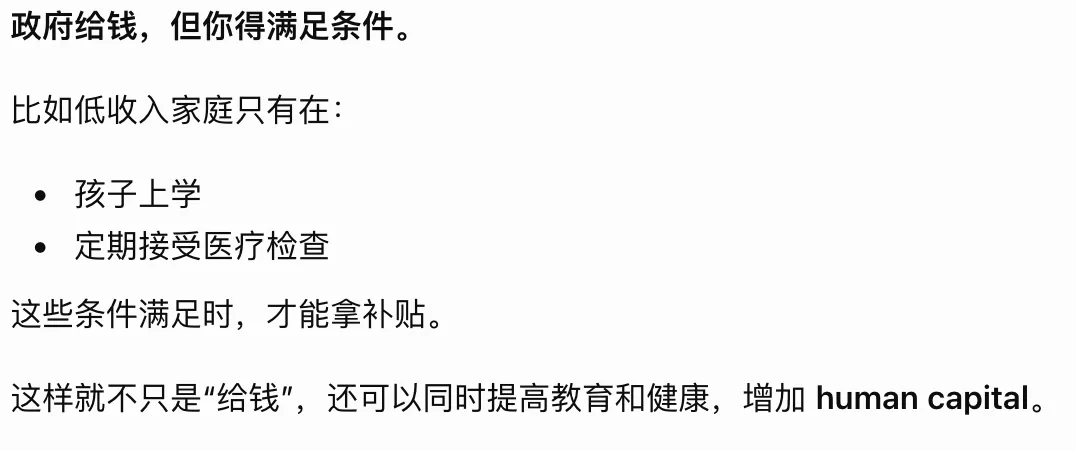
- conditional cash transfers
-
- advantages
- transfer payments 很有效地改善 income distribution, better achieve income equality
- disadvantages
- 政府要花很多钱,会增加 budget burden,而且这些钱本来可以拿去做别的事情,所以有 opportunity cost。
- disincentive to work
- especially when the unemployment benefits are too high
- Transfer payments are government payments to vulnerable groups designed to redistribute income and reduce inequality.
- redistribute income
- targeted government spending on goods and services
- 花钱提供 merit goods
- 有些东西对个人和社会都很好,但如果完全交给市场,穷人可能买不起,所以消费会不足
- education 教育
- health care 医疗
- 政府直接免费或低价提供
- 给私人提供者 subsidy,让供给增加、价格下降
- 通过 transfer payments 帮助穷人支付
- merit goods provision → better access for low-income groups → less inequality of opportunity → higher future earning potential → less income inequality
- infrastructure 也很重要
- clean water
- sanitation
- sewerage
- merit goods 通常有 positive externalities。
- 比如教育不只是让学生本人受益,社会也会受益。所以政府多提供这些东西,还可以纠正市场失灵
- 缺点
- 政府要花很多钱
- higher government budget burden
- 有 opportunity cost,因为这些钱本来可以花在别的地方
- Governments provide merit goods such as education and healthcare at low or zero prices to improve access for low-income groups, reduce inequality, and correct market failure, but this creates a burden on the government budget and involves opportunity costs.
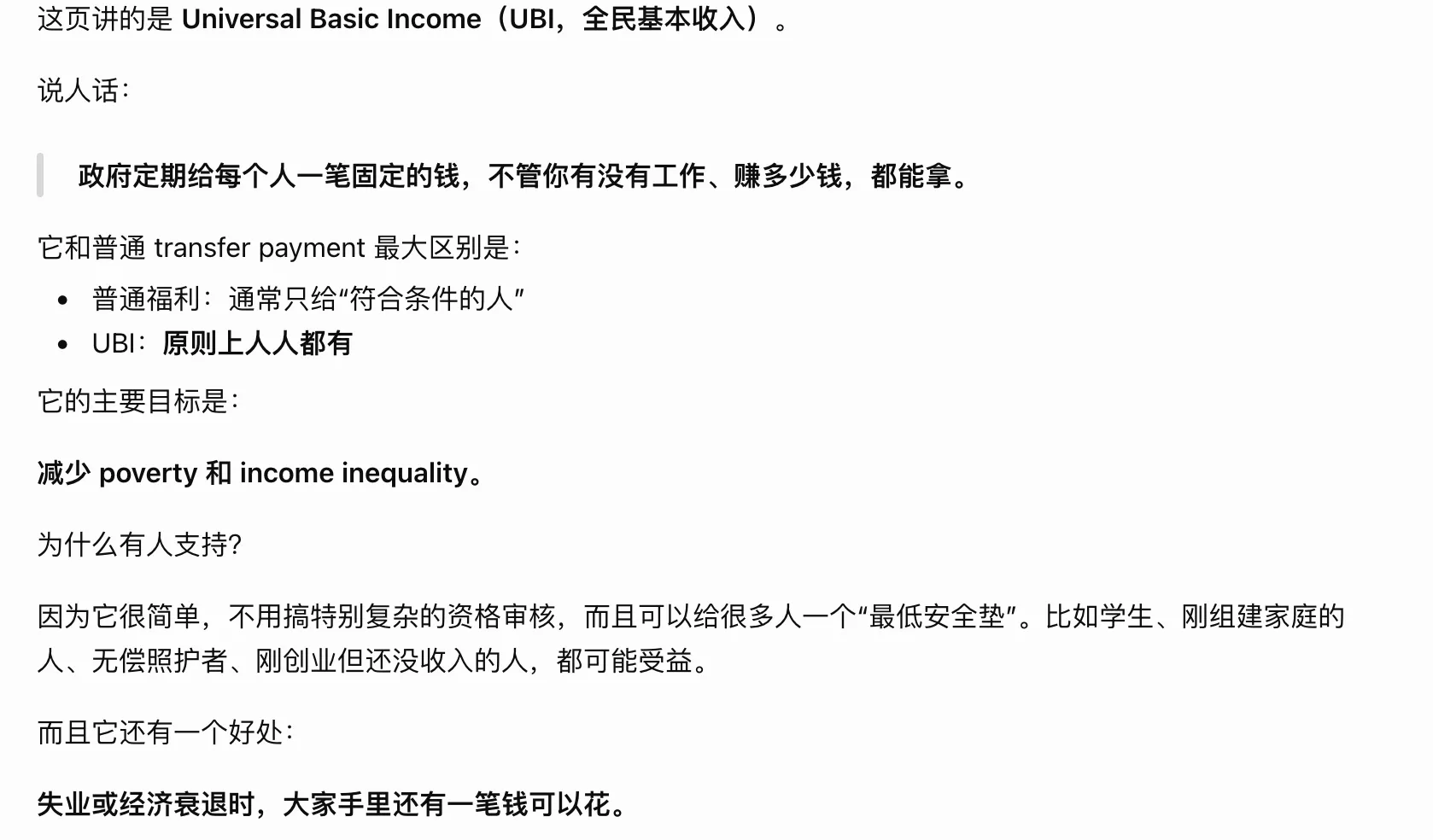
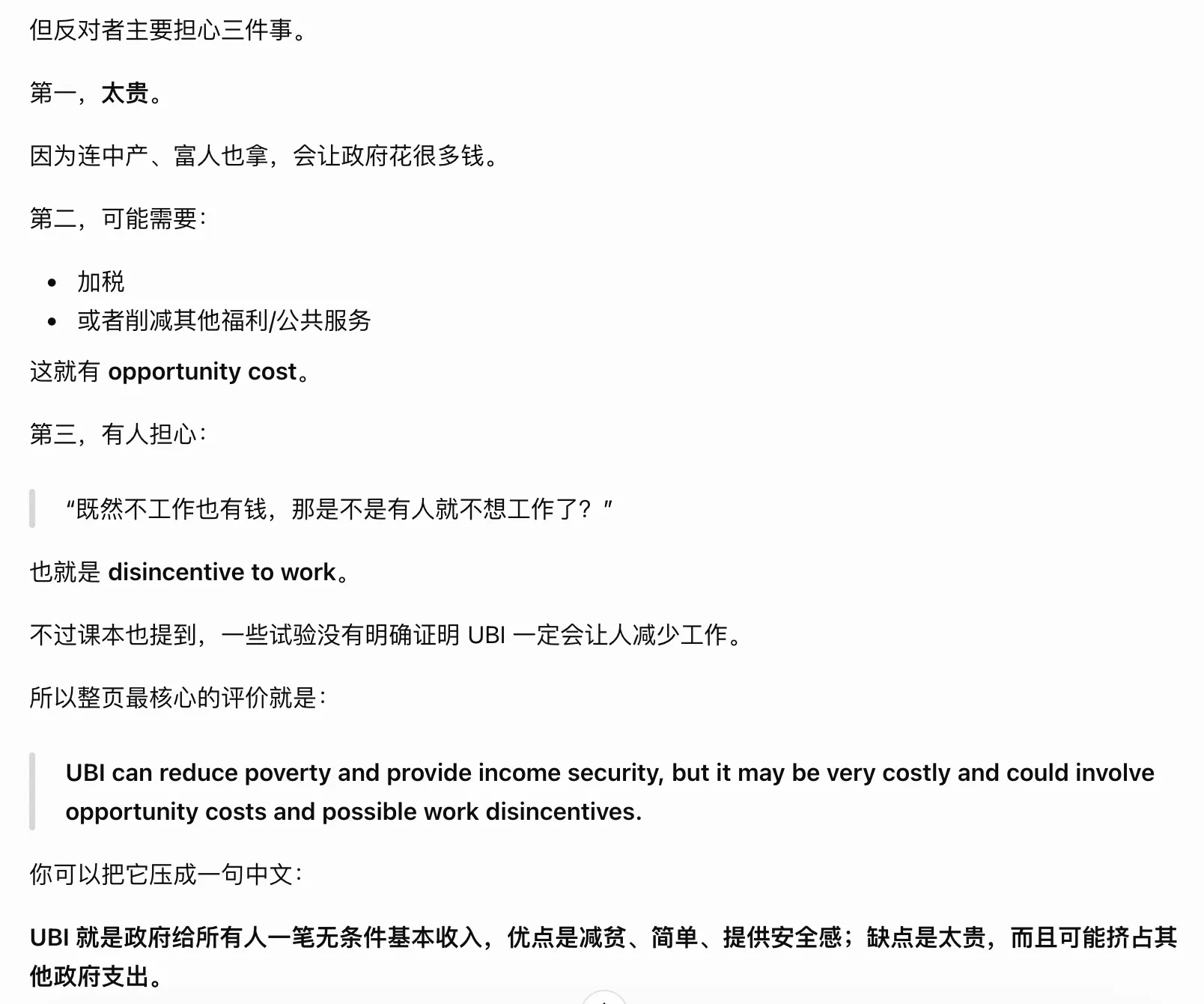
- universal basic income
-
- minimum wages and price controls
-
-
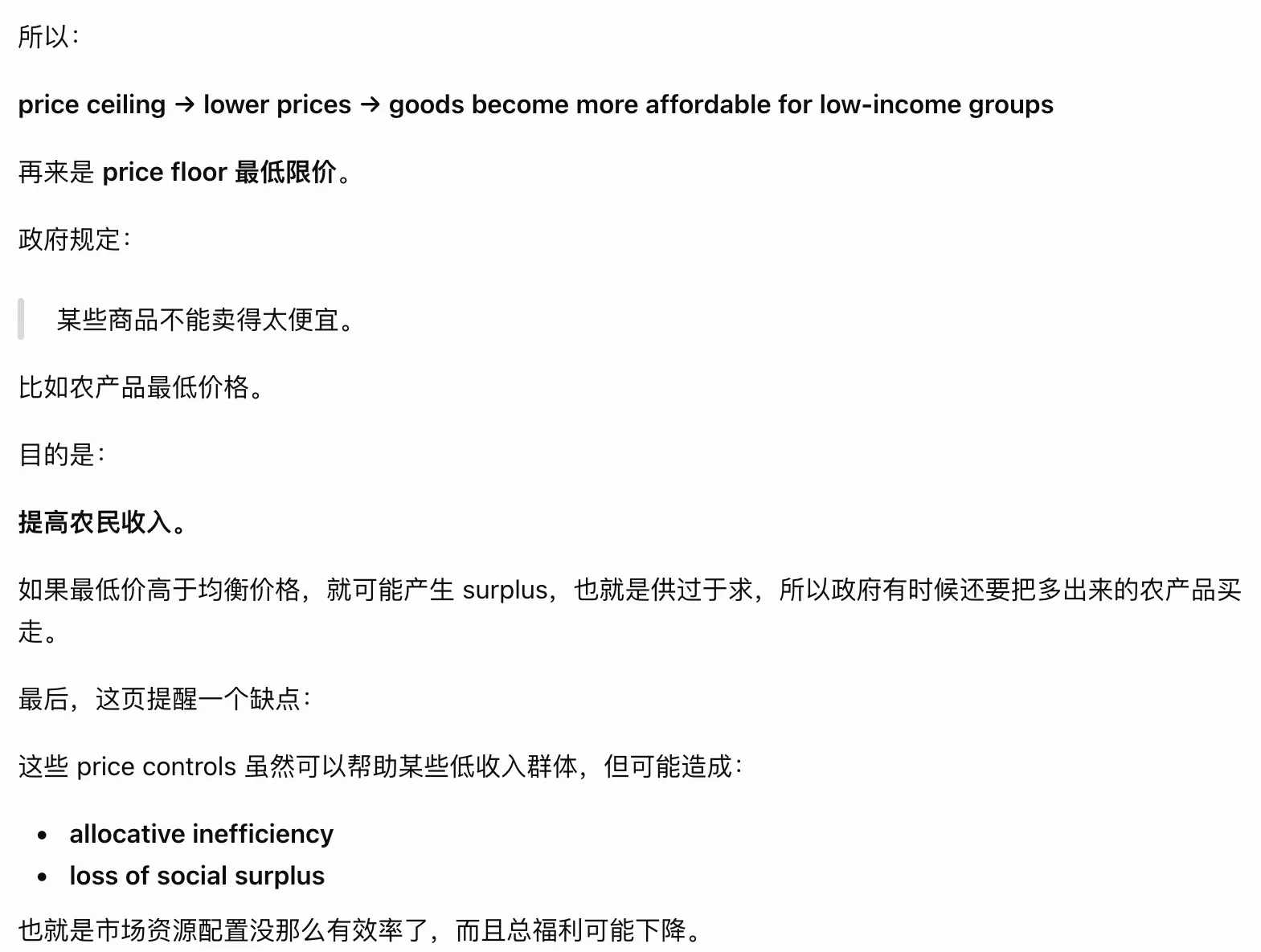
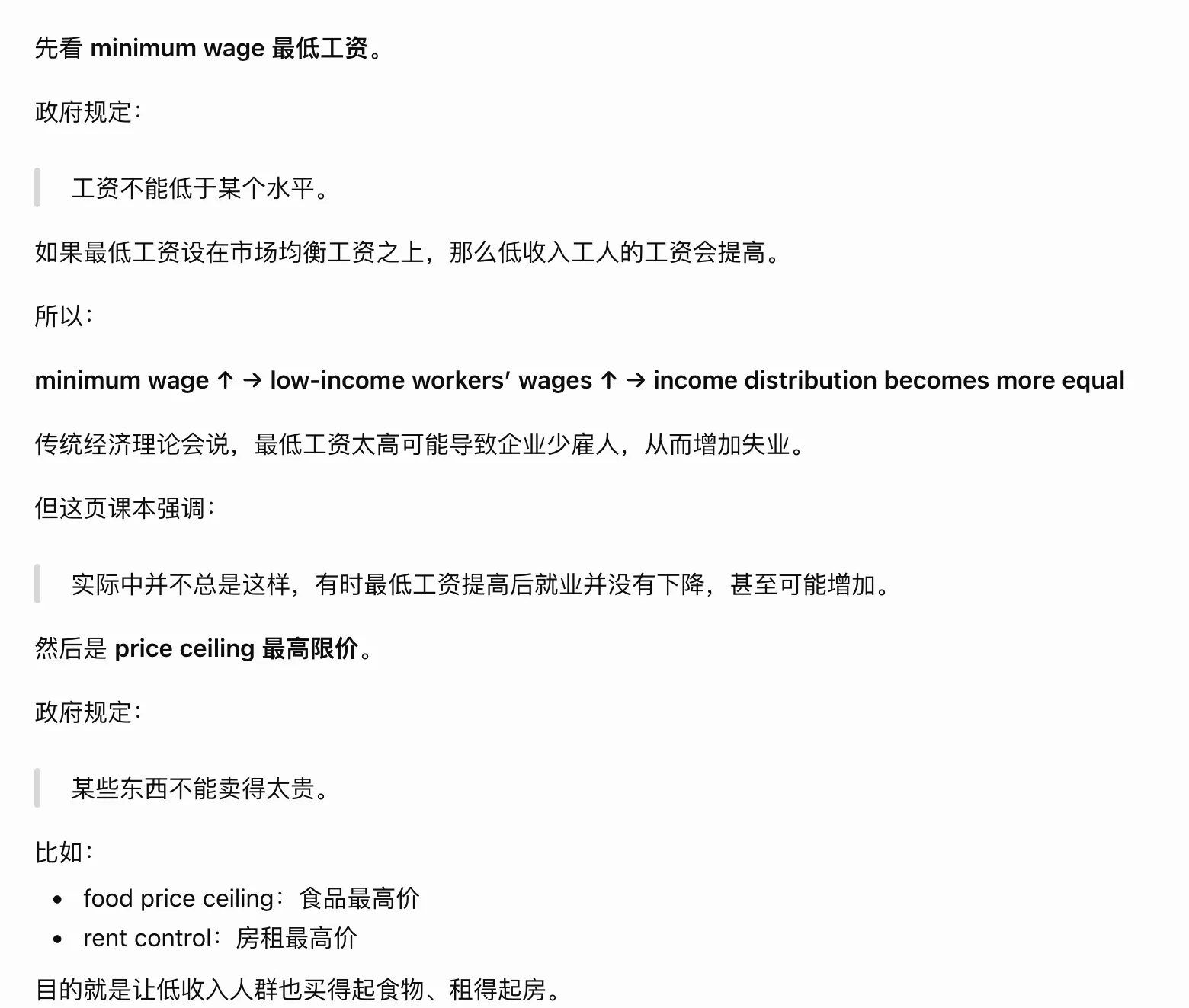
- Minimum wages and price controls can improve income distribution by raising incomes or lowering essential costs for low-income groups, but they may create market inefficiencies.
-