micro
Elasticities
Price Elasticity of Demand (PED)
-
measures the responsiveness of a percentage change in the quantity demanded to a percentage change in price
-
ignore the sign of PED, using the absolute value
-
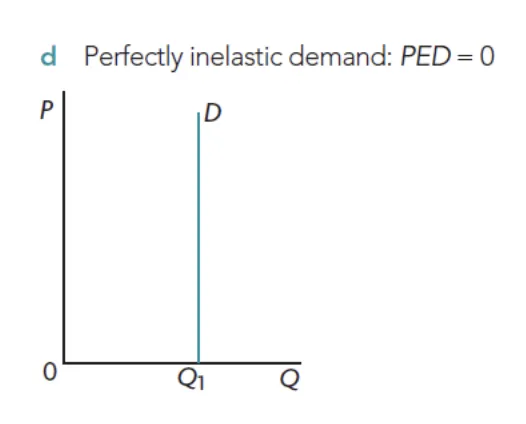
PED = 0
-
perfectly inelastic demand
-
change in price leads to no change in quantity demanded
-
-
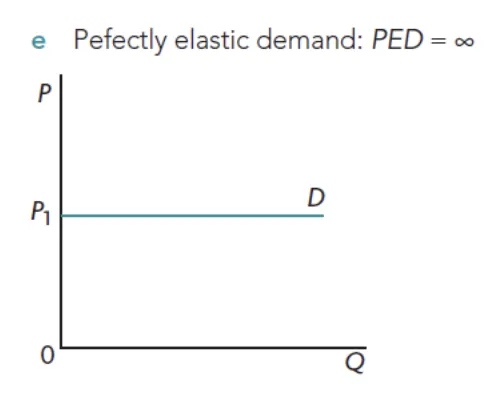
PED = infinity
-
perfectly elastic demand
-
change in price leads to an infinite change in quantity demanded
-
-
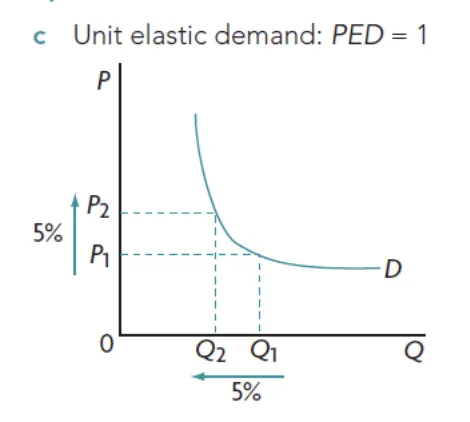
PED = 1
-
unit elastic demand
-
percentage change in quantity demanded equals percentage change in price
-
-
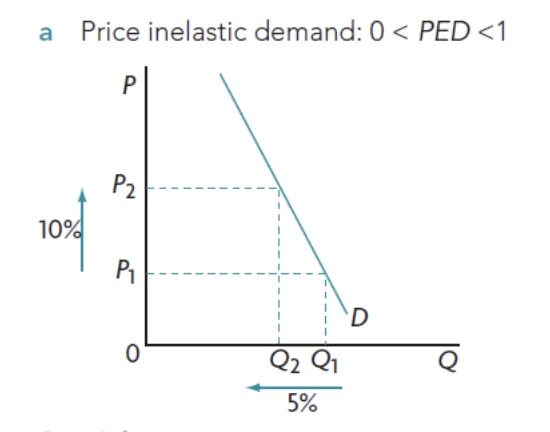
0 < PED < 1
-
price inelastic demand
-
a change in price leads to a proportionately smaller change in quantity demanded
-
quantity demanded is relatively unresponsive to price
-
-
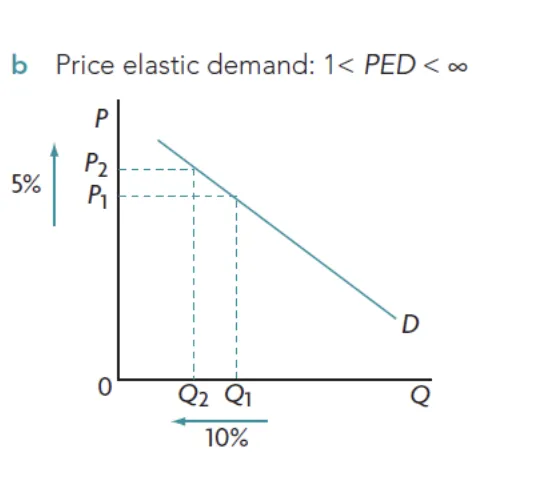
1 < PED < infinity
-
price elastic demand
-
quantity demanded is relatively responsive to price
-
a change in price leads to a proportionately greater change in quantity demanded
-
-
Determinants of PED
- alternative ?
- has alternatives
- elastic
response to different products; switch to other products
- elastic
- no alternatives
- inelastic
must purchase that product; cannot switch to other
- inelastic
- eg. insuline, drugs,medicines, electricity
- has alternatives
- close substitutes ?
- have close substitutes
- elastic
- no close substitutes
- inelastic
- have close substitutes
- addictive ?
- no
- elastic
- yes
- inelastic
- eg. drugs, cigarettes
- no
- proportion of income does the product require
- high proportion
- elastic
- eg. luxuries
- low proportion
- inelastic
- eg. instant noodle
- high proportion
- necessity ?
- yes
- inelastic
- eg. electricity, water, rice
- no
- elastic
- yes
- alternative ?
-
Revenue Maximization
-
-
PED of Primary Sector
- the goods of Primary Sector are raw materials that are extracted or harvested directly from the natural environment, such as agricultural products, minerals, or energy resources, before any processing or manufacturing has taken place.
- the PED of primary sector is relatively low (inelastic) because
- They are essential for manufacturing ( necessities)
- Account for a small proportion of national income
- fewer substitutes/alternatives for primary commodities
-
PED of Secondary Sector
- The secondary sector involves industries that process, manufacture, or construct goods by using raw materials from the primary sector.
- Manufactured goods are goods produced in the secondary sector of the economy ( eg. TVs, cars, phones, buildings )
- the PED of manufactured good is relatively high (elastic) because
- There is a lower degree of necessity ( does not used in manufacturing)
- Secondary goods account for a higher proportion of income
- There are many more substitutes ( alternatives)


Price Elasticity of Supply (PES)
-
measures the responsiveness of percentage change in quantity supplied to percentage change in price
-
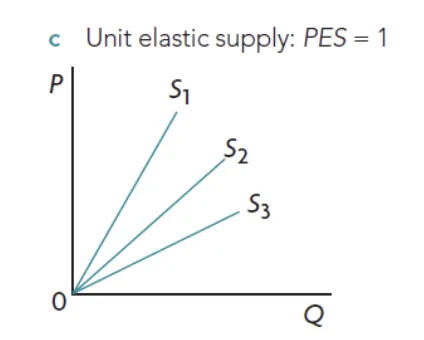
PES = 1
-
Unit Elastic Supply
-
the graph passes through origin -> PES = 1
-
percentage change in quantity supplied equals percentage change in price
-
-
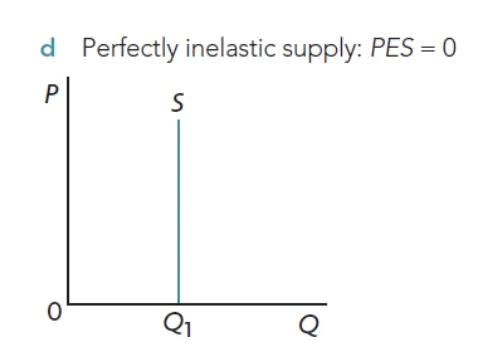
PES = 0
-
Perfectly Inelastic Supply
-
quantity supplied is completely unresponsive to price
-
change in price leads to no change in quantity supplied
-
eg. the supply of fish at the moment when fishing boats return from sea;
-
-
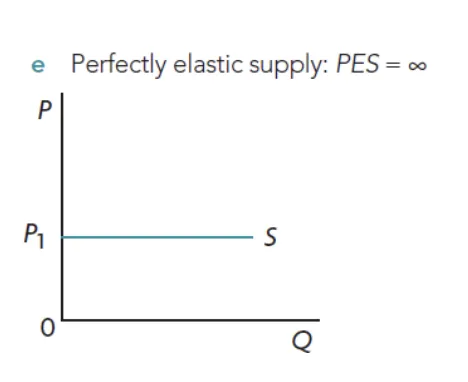
PES = infinity
-
Perfectly Elastic Supply
-
quantity supplied is infinitely responsive to price
-
-
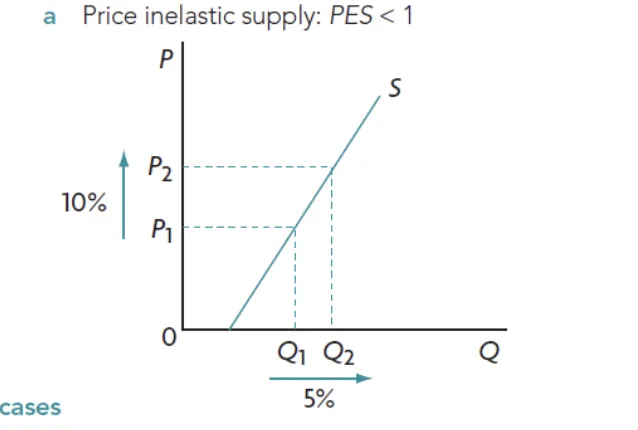
0 < PES < 1
-
Price Inelastic Supply
-
quantity supplied is relatively unresponsive to price
-
a percentage change in price leads to a smaller percentage change in quantity supplied
-
eg. agricultural goods, petrol
-
-
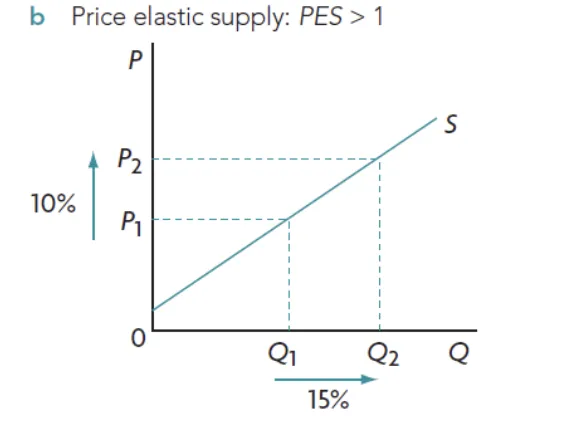
1 < PES < infinity
-
Price Elastic Supply
-
quantity supplied is relatively responsive to price
-
a percentage change in price leads to a greater percentage change in quantity supplied
-
eg. goods that are not perishable: pens, computers
-
-
Determinants of PES
- time to produce
- long
- inelastic
- eg. agricultural goods, petrolium, houses, buildings
- short
- elastic
- eg. clothes, pens, masks, online courses
- these includes: time is required to produce the product, times is required to obtain the FOPs, time is required to distribute good to consumers
- long
- storage ?
ability to store stocks- yes
- elastic
- eg. pens, computers
- not
- perishable goods
- inelastic
- eg. fruit, flower, sea food
- yes
- Spare (unused) capacity of firms
- extra
- elastic
- low
- inelastic
-

- extra
- Mobility of Factors of Production
- mobile
- elastic
- immobile
- inelastic
-

- mobile
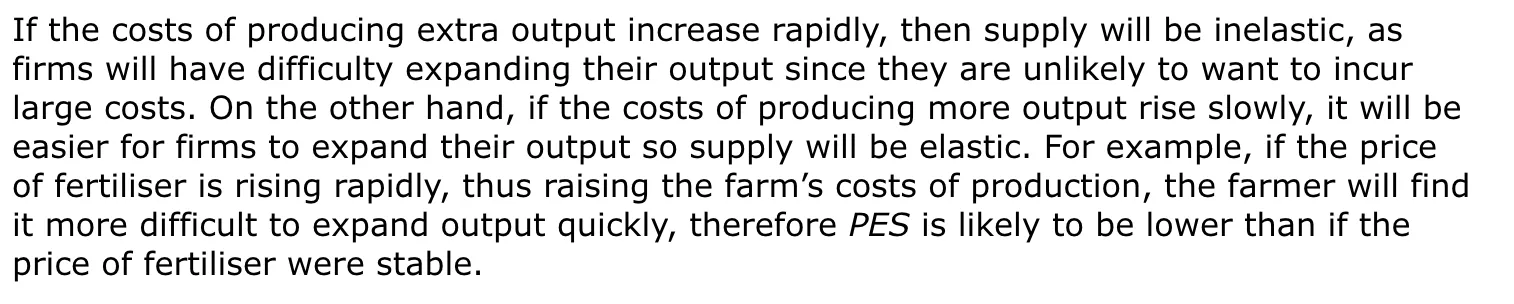
- Rate of cost increases
- high
- inelastic
- low
- elastic
-
- high
- time to produce
Income Elasticity of Demand (YED)
-
measures the responsiveness of percentage change in quantity demanded to percentage change in consumer’s income
-
the sign and numerical value of YED are important
-
YED > 0
- indicates that the good is normal good
- demand for the good and income change in the same direction ( both increase or decrease)
-
YED < 0
- indicates that the good is inferior good
- demand for the good and income move in opposite direction( one increases, another one decreases, vice versa)
- eg. Bus rides, second handed/ used clothes and cars, instant noodles
-
when the YED > 0, we will also consider its numerical value. we know that YED > 0 means it’s a normal good, but based on the numerical value, normal good can be seperated into necessities and luxuries.
- 0 < YED < 1
- Necessities.
- income inelastic demand
- a percentage change in income leads to a smaller pecentage change in quantity demanded
- this is because, you actually don’t need too much of necessities like food or water, even as income increases, enough is good;
- YED > 1
- Luxuries and Services.
- income elastic demand
- a percentage change in income leads to a greater percentage change in quantity demanded
- 0 < YED < 1
-
demand shifts in response to increase in income for different YEDs
-
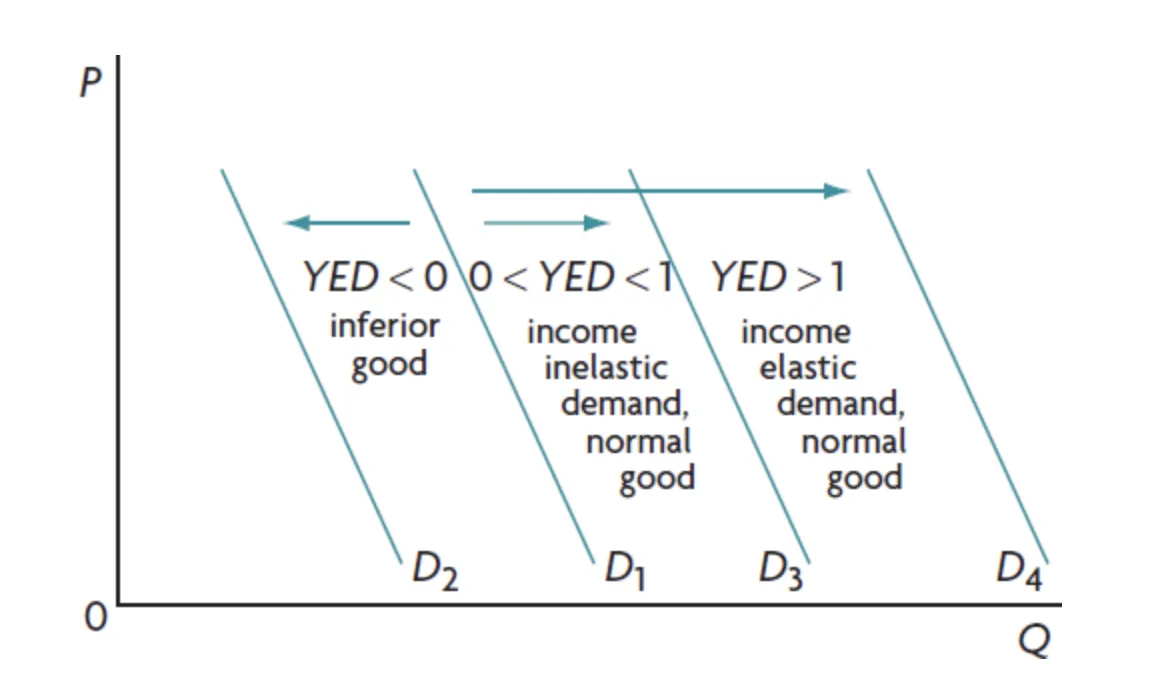
- notice that income serves as a non-price determinant of demand; so it causes a shift, not movement along the curve.
-
-
Different Sectors
Summary: YED increases from primary sector to quaternary sector
- Primary Sector: Natural Resources
- is raw materials that are extracted or harvested directly from the natural environment, such as agricultural products, minerals, or energy resources, before any processing or manufacturing has taken place.
- Secondary Sector: Manufactured goods, physical goods
- The secondary sector involves industries that process, manufacture, or construct goods by using raw materials from the primary sector.
- Tertiary Sector: Services, non physical & invisible
- The tertiary sector provides services rather than tangible goods, supporting both consumers and businesses.
- Quaternary Sector: Advanced goods, internet
- The quaternary sector consists of knowledge-based activities that involve information processing, research, innovation, and advanced technology.
- Primary Sector: Natural Resources