macro / ch 10
10.2Low and stable rate of inflation
Inflation, disinflation, and deflation
- Inflation
- defined as a sustained increase in the general price level
- average prices of all the goods and services in the economy
- sustained means the general price level must increase to a new level and not fall back again to its previous lower level
- it only indicates that prices of goods and services are increasing on average
- defined as a sustained increase in the general price level
- Deflation
- defined as a sustained decrease in the general price level
- it is also likely to be uneven
- the price of some goods and services are falling, with some prices constant or even increasing
- indicates that prices of goods and services are decreasing on average
- defined as a sustained decrease in the general price level
- Disinflation
- represents decrease in the rate of inflation
- occurs when inflation occurs at a lower rate
- represents decrease in the rate of inflation
Measuring inflation and deflation
- The consumer price index
- measure of average prices in one period relative to average prices in a reference period called a base period
- CPI is a measure of the cost of living, or the cost of goods and services purchased by the typical household in an economy
- CPI is a measure of the cost of living for the typical household, and compares the value of a basket of goods and services in one year with the value of the same basket in a base year.
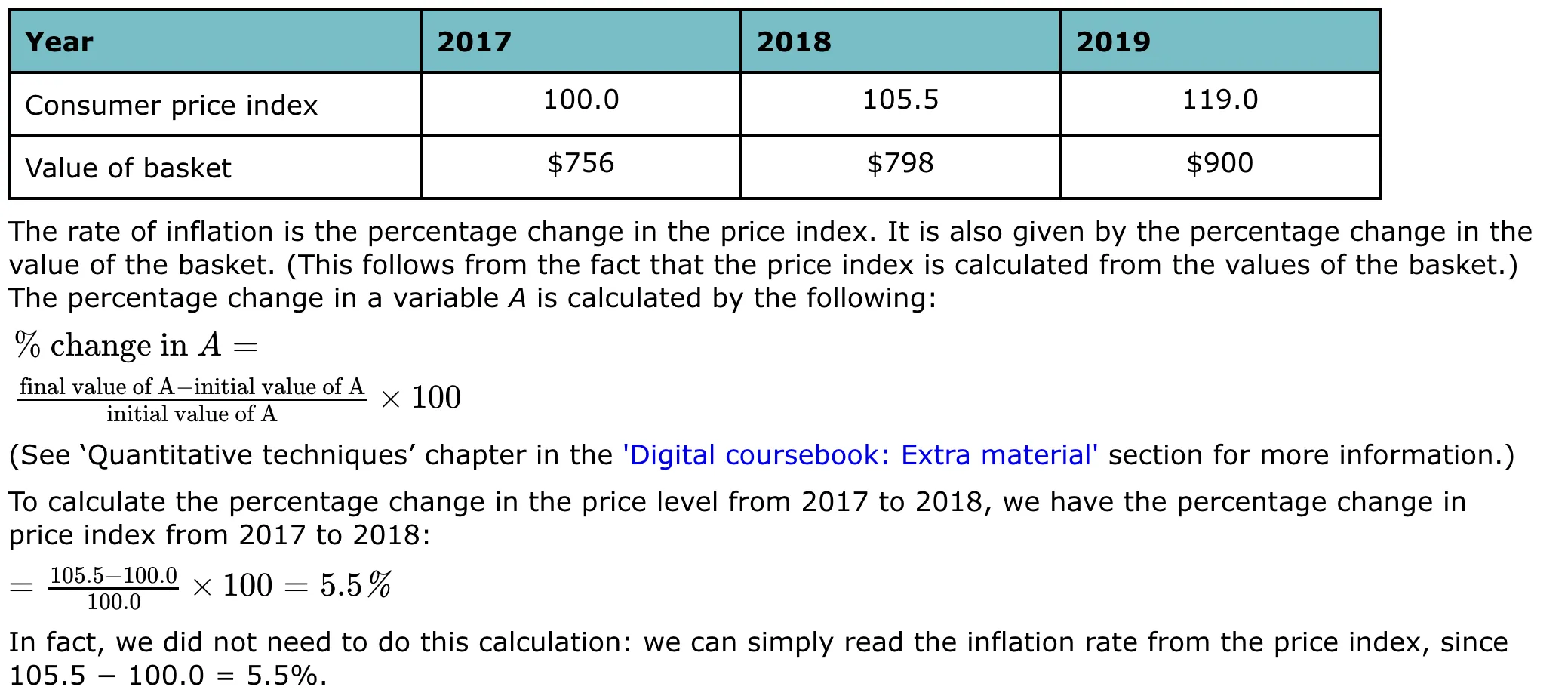
- Inflation or deflation are measured in a percentage change in the value of basket from one year to another.
-
- A statistical agency creates a fixed “basket” of goods and services commonly purchased by households.
- In the base year, the total value of the basket is calculated using:
- Total Value=∑(Price×Quantity)
- The value of the same basket is then calculated in later years and compared with the base year to construct the CPI.
-
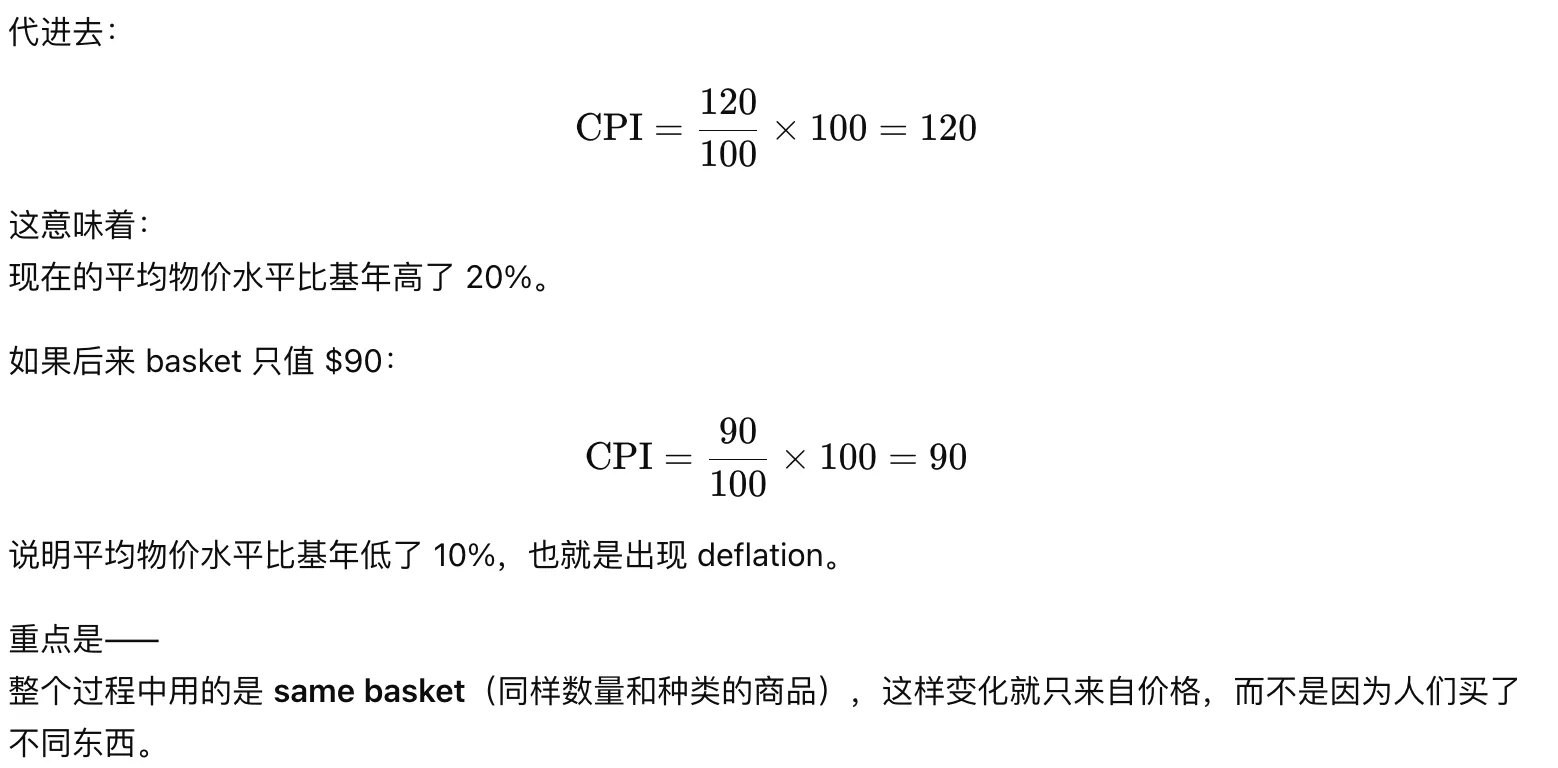
- If the CPI rises, it indicates inflation (an increase in the average price level)
- If the CPI falls, it indicates deflation (a decrease in the average price level).
- Using CPI to calculate the rate of inflation
-


Problems with the consumer price index (CPI)
- Different rates of inflation for different income earners
- CPI only reflects the change in average prices of goods and services included in the basket.
- however, different consumers have different consumption patterns depending on their income levels, and these may differ from what is included in the basket
- Different rates of inflation depending on regional or cultural factors
- some consumers’ purchasing patterns differ from the typical goods and services included in the CPI basket, because of variation in tastes due to cultural and regional factors
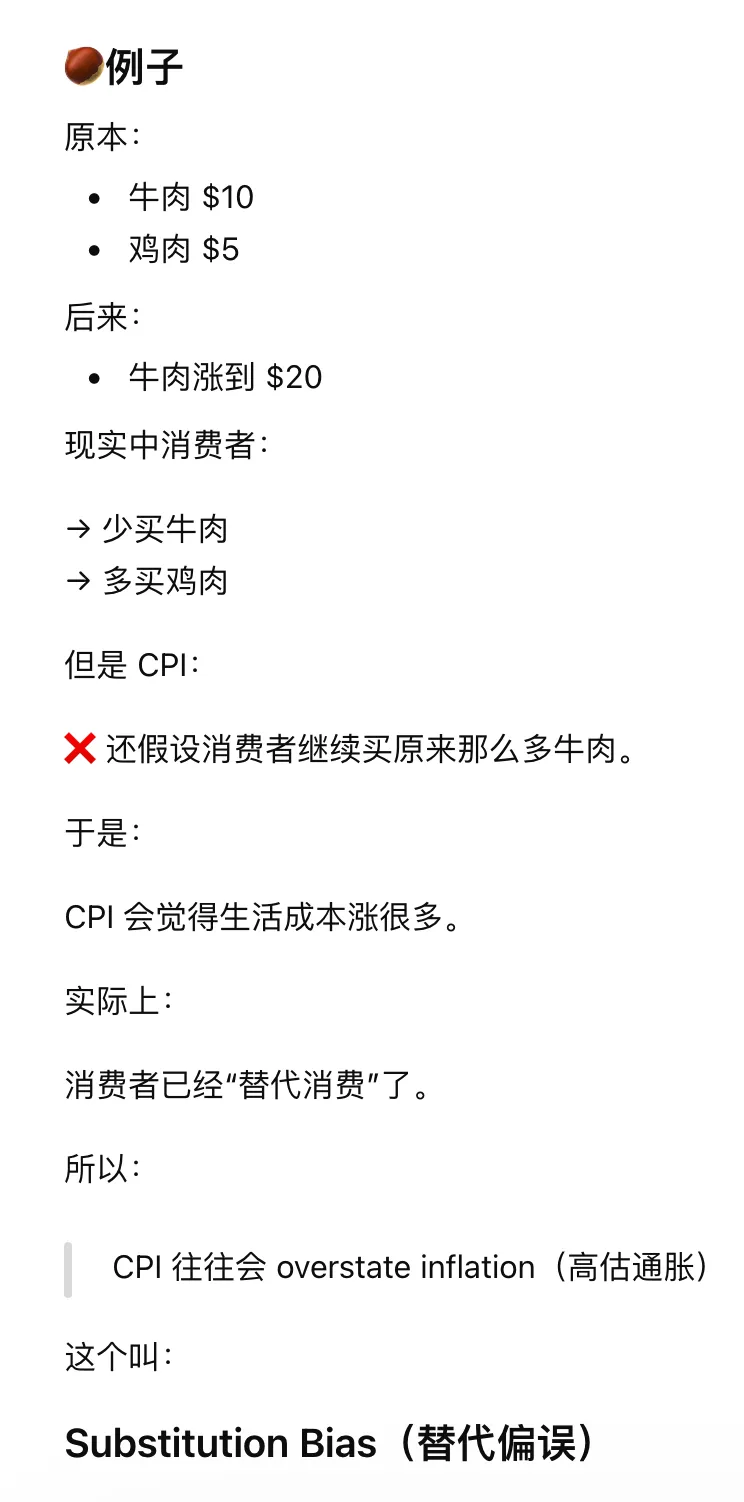
- Changes in consumption patterns due to consumer substitutions when relative prices change
- Substitution Bias
- 当某商品变贵时,人们会改买便宜替代品
- 但 CPI 的 basket 和 weights 是固定的
-
- Changes in consumption patterns due to introduction of new products
-
- Changes in product quality
-
- International comparisons
-
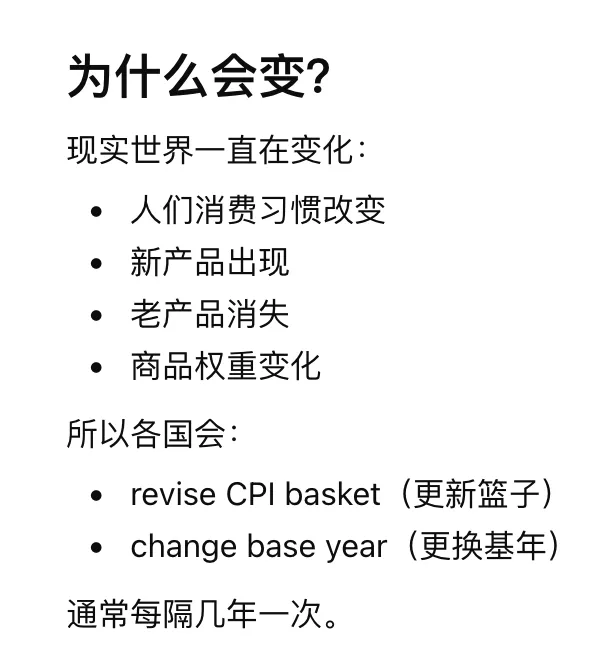
- Comparability over time
- 不同时期的 CPI 不能完全直接比较
- 因为CPI 的 basket 会变
-
-
-
Causes of inflation
- Demand-pull inflation
- caused by increases in AD (in turn caused by changes in any of the determinants of AD)
- increase the price level (inflation)
- expand real output
-
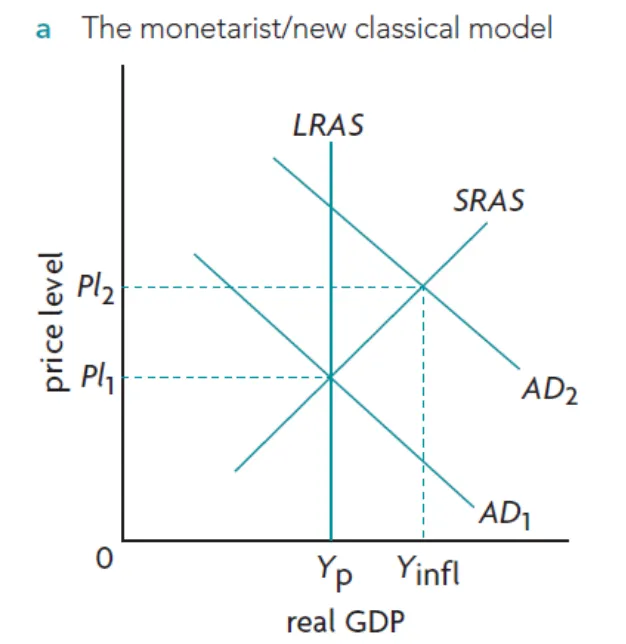
- demand-pull inflation is associated with an inflationary gap
- real GDP is greater than full employment GDP
- unemployment falls to a level below the natural rate of unemployment
- this is because the demand for labour is so large so that some workers who are structurally, frictionally or seasonally unemployed temporarily find jobs
-
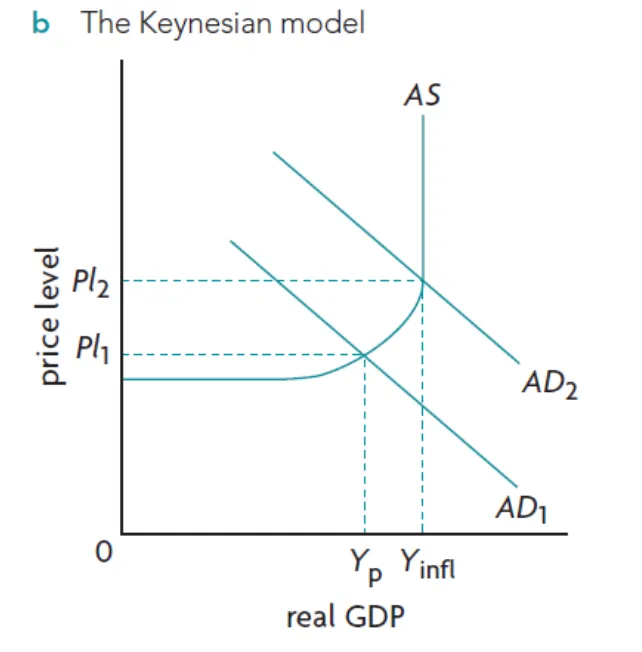
- involves an excess of AD over AS at the full employment level of output, and is caused by an increase in AD
- Cost-push inflation
- cost-push inflation is caused by increases in costs of production or supply-side shocks
- increase in costs of production -> SRAS decreases and shifts to the left -> leading to an increase in the price level from Pl1 to Pl2 (inflation) -> fall in the equilibrium level of real GDP from Yp to Yrec (recession), this is also called stagflation(umemployment rises)
-
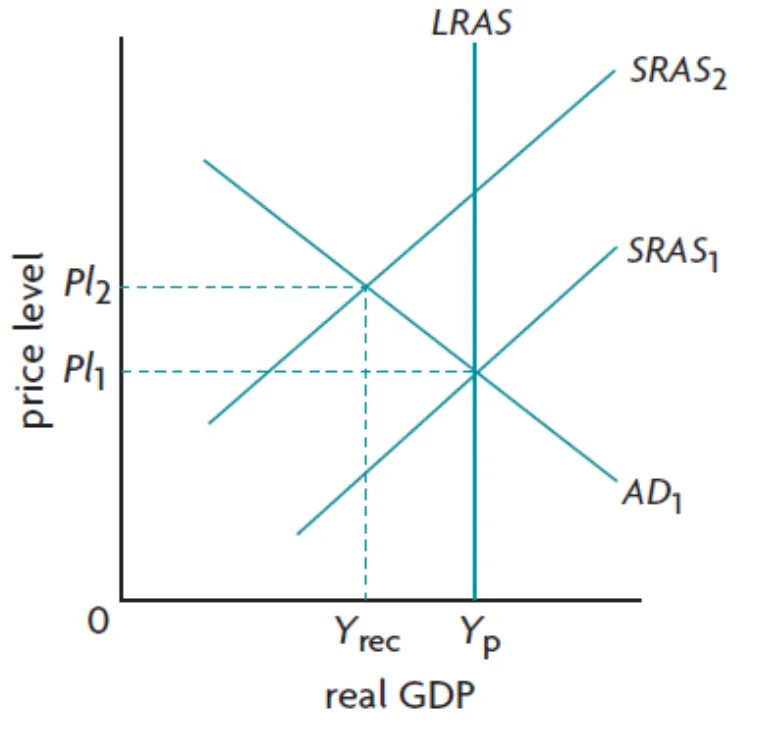
- the output level Yrec indicates a recession. But this is not called a recessionary or deflationary gap, because output gaps can only be caused by deficient or sufficient (too much) AD.
- cost-push inflation is caused by a fall in AS, in turn resulting from increases in wages or prices of other inputs, causing the AS to shift leftward
Costs of a high rate of inflation
- The relationship between inflation, purchasing power and nominal and real income
- purchasing power refers to the quantity of goods and services that can be bought with money
- real income is the same as purchasing power, it refers to what your money can buy; it decreases as prices rise, and increases as prices fall
- % change in real income (or purchasing power) = % change in nominal income - % change in the price level (or the rate of inflation)
- according to the equation above
- inflation leads to fall in real income/purchasing power, when nominal income is constant
- vice versa
- purchasing power refers to the quantity of goods and services that can be bought with money
- Costs of inflation
- Redistribution effects
- inflation redistributes income away from certain groups in the economy and towards other groups
- some people lose and are worse off, other groups gain purchasing power and become better off
- Groups who lose from inflation include
- People who receive fixed incomes or wages
- for people with fixed incomes and wages, when the general price level increases they become worse off, their real income and purchasing power falls
- workers have wage contracts fixing their wages over a period of time
- pensioners receive fixed pensions
- landlords receive fixed rental income
- individuals receive fixed welfare payments
- People who receive incomes or wages that increase less rapidly than the rate of inflation
- when incomes do not keep up with a rising price level (do not increase as fast as the PL), a fall in people’s real incomes results and they therefore become worse off.
- Holders of cash
- As the price level increases, the real value or purchasing power of any cash held falls
- since the nominal value of cash does not change, % real = % nomial - % rate of inflation ( % change in price level), the real value of any cash falls
- Savers
- People who save money may become worse off as a result of inflation
- in order to maintain the real value of their savings, savers must receive a rate of interest that is at least equal to the rate of inflation
- in general, savers who receive a rate of interest on their savings lower than the rate of inflation suffer a fall in the real value (or purchasing power) of their savings.
- Lenders(creditors)
- People who lend money may be worse off due to inflation
- if in the course of the year there is an increase in the PL (inflation), the real value of the money you will get back from your friend at the end of the year will have fallen.
- since the nominal money you will get back is the same
- but you can charge a rate of interest to maintain the real value of money
- People who receive fixed incomes or wages
- Groups who gain from inflation include
- Borrowers (debtors)
- in general, borrowing at a lower interest rate than the rate of inflation makes the debtor better off at the end of the loan period
- Payers of fixed incomes or wages
- as long as nominal wages, pensions, rents, welfare payments are fixed while there is inflation, the payers benefit as the real value of their payments falls due to inflation
- Payers of incomes or wages that increase less rapidly than the rate of inflation
- as long as incomes of any kind increase less rapidly than the rate of inflation, the payers of these incomes benefit due to the falling real value of their payments
- Borrowers (debtors)
- Uncertainty
- people cannot predict future changes in purchasing power (of income, wealth, loans and anything else that is measured in terms of money)
- people are unable to make accurate forecasts of costs and revenue
- the uncertainty leads to fewer investments, thereby lower economic growth
- Effects on saving
- inflation lowers the incentive to save
- if the rate of inflation is high, people may spend more now in order to avoid higher prices in the future, in which case the effect may be to further lower saving
- Effects on economic growth
- high inflation does not favour economic growth
- due to uncertainty among firms, it causes investment to fall, also lower saving means that there are less funds available for investment
- this will reduce the AD, thereby leads to a fall in real GDP and economic growth
- Redistribution effects
- Costs of hyperinflation(恶性通胀)
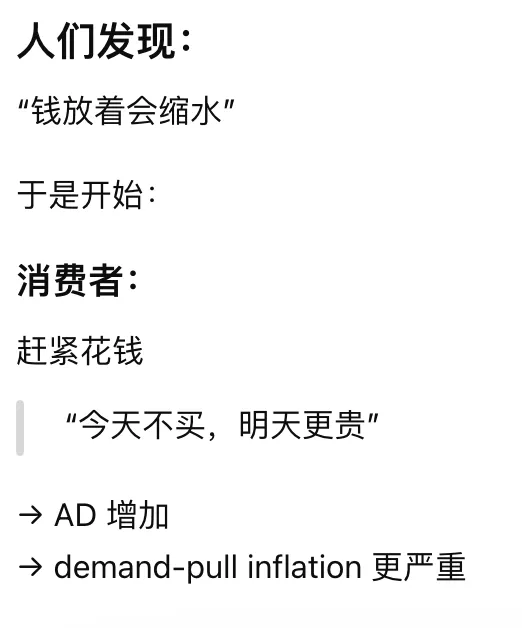
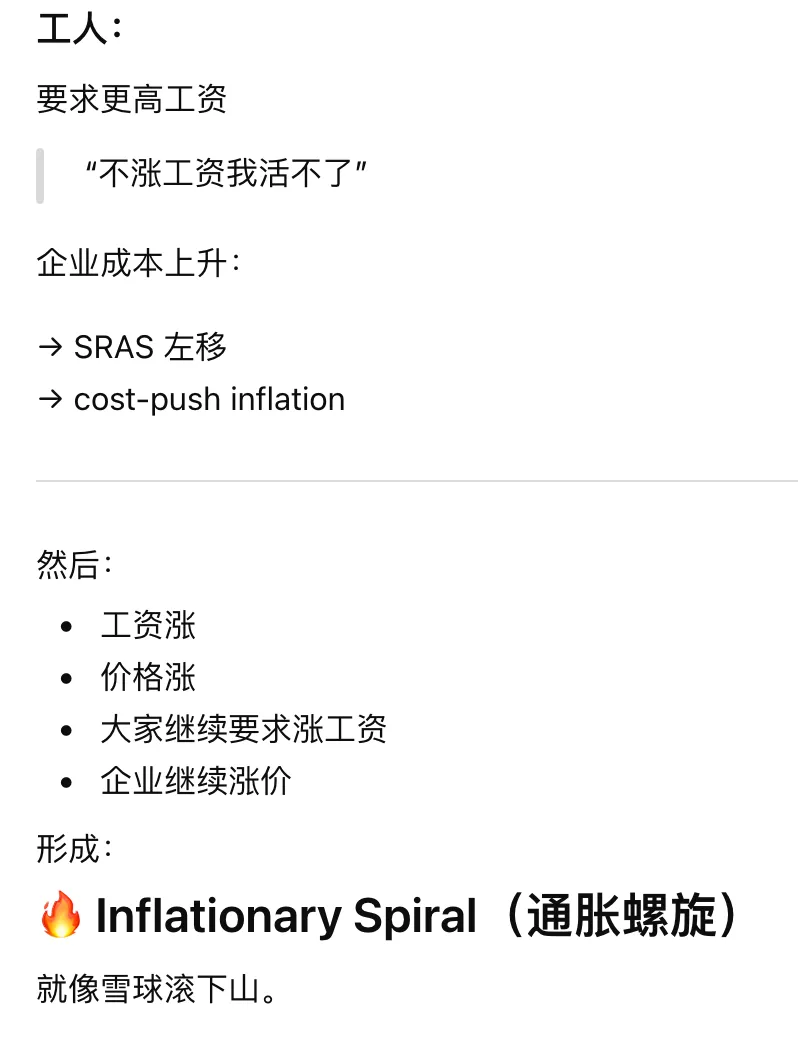
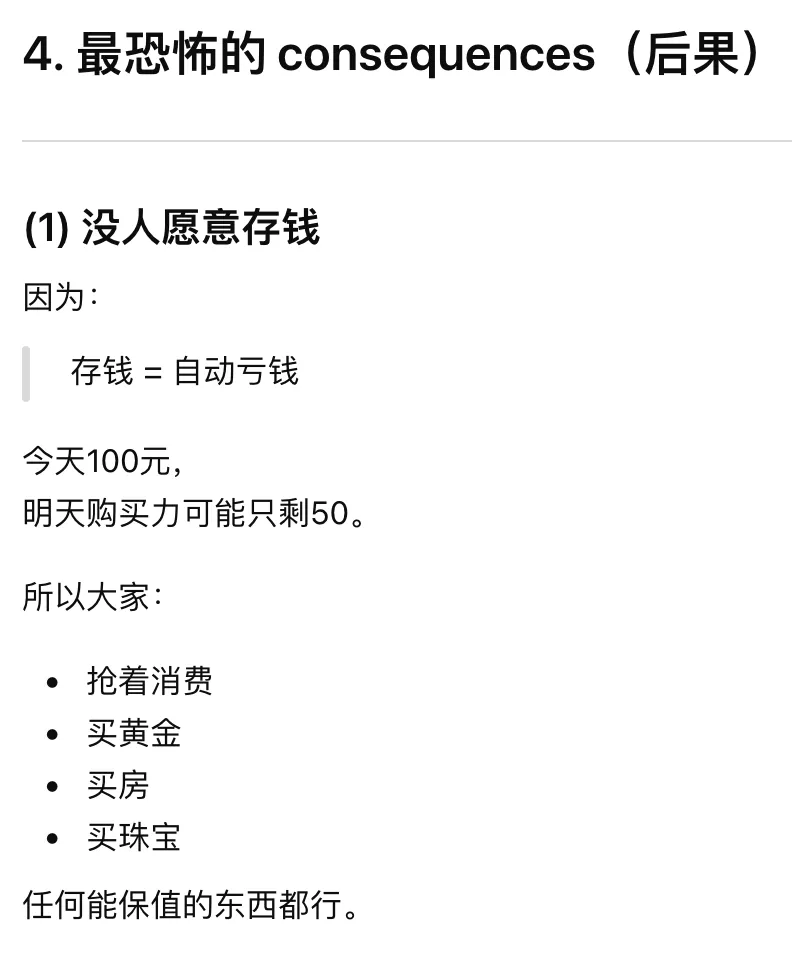
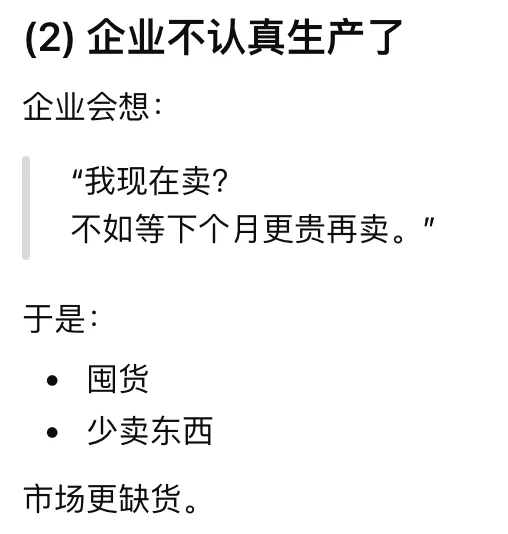
- 政府疯狂印钱导致物价的疯狂上涨
- 市场上的货币 supply 暴增
- inflationary spiral
-
- 政府疯狂印钱导致物价的疯狂上涨
Causes of deflation
- Why deflation occurs rarely in the real world
- Wages for workers do not ordinarily fall
- This means it is difficult for firms to lower the prices of their products, as it would only decrease their profits, especially since wages represent a large proportion of a firm’s costs of production
- wages are sticky due to labour contract, minimum wage legislation, worker and union resistance to wage cuts
- Large oligopolistic firms may fear price wars
- if one firm lowers its price, then others may lower theirs more aggressively in an effort to capture market share, all then all the firms will be worse off. Therefore, firms avoid cutting prices
- Wages for workers do not ordinarily fall
- Causes of deflation
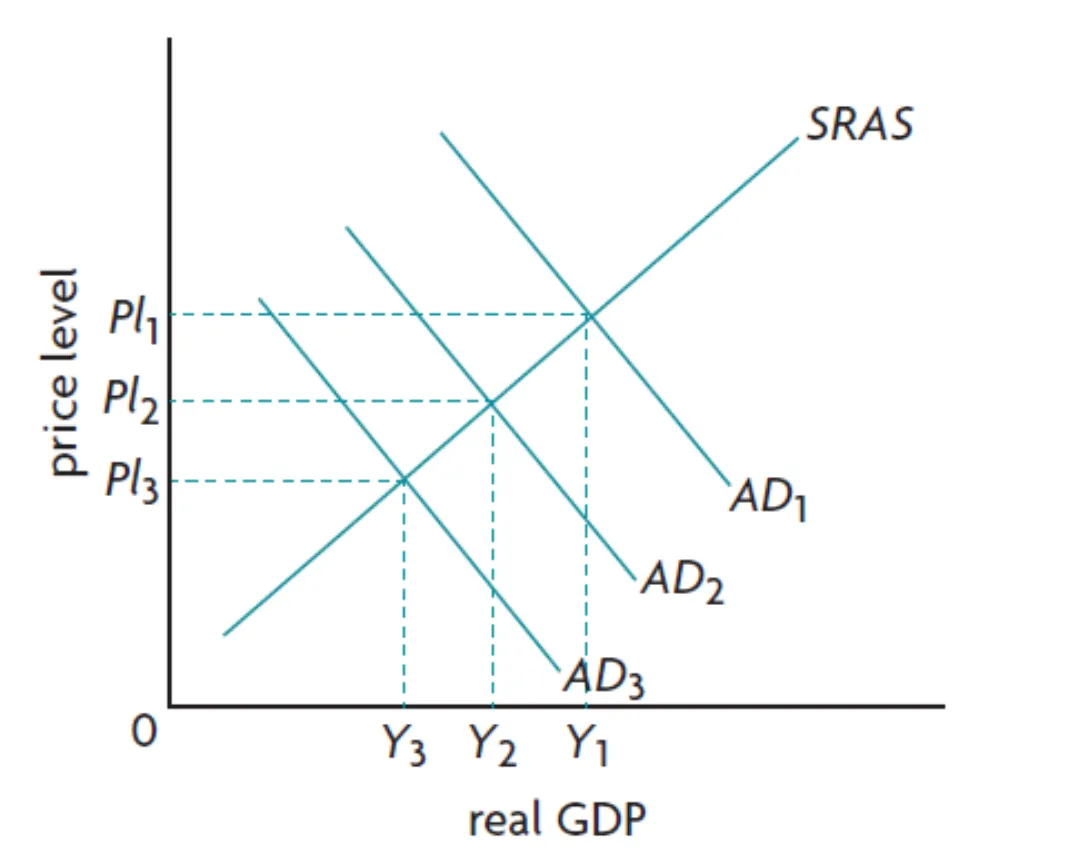
- decrease in AD
-
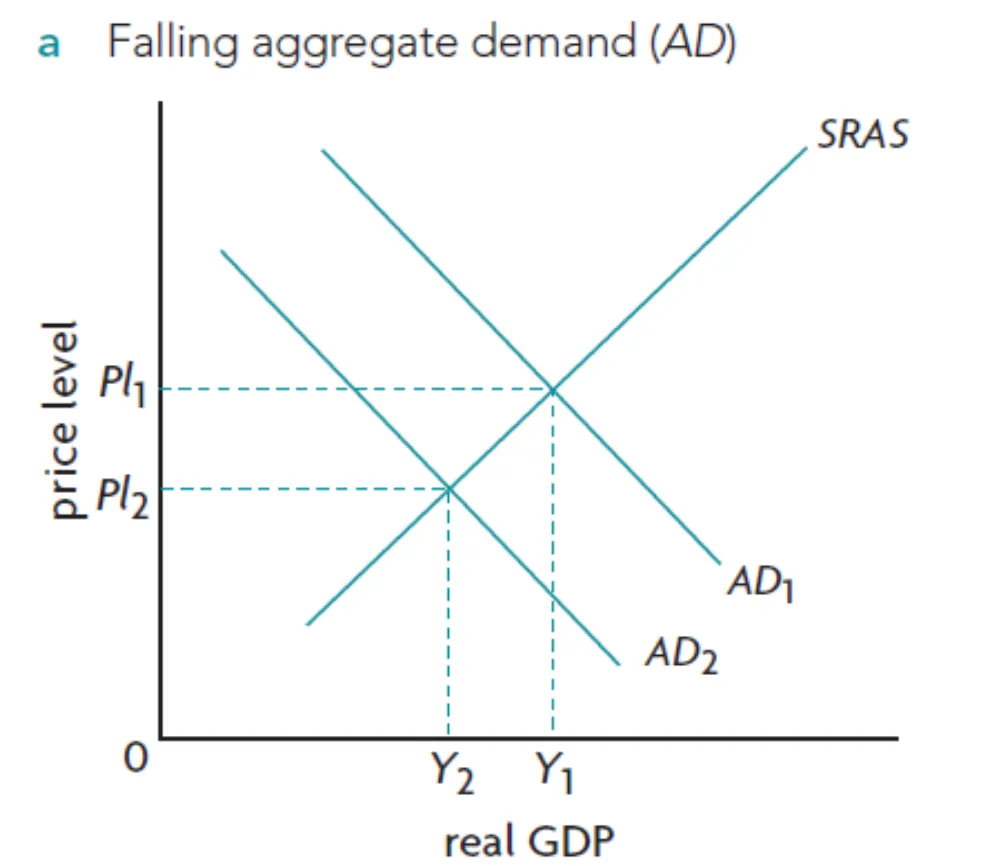
- AD 下降导致的 deflation = “bad deflation”
- 例如:business confidence,消费者/企业信心下降
- AD 从 AD₁ 左移到 AD₂
- Price level 下降
- Real GDP 从 Y₁ 下降到 Y₂
- 后果:
- recession
- income falling
- output falling
- cyclical unemployment 上升
- 例子:Great Depression,日本长期通缩
-
- increase in AS
-
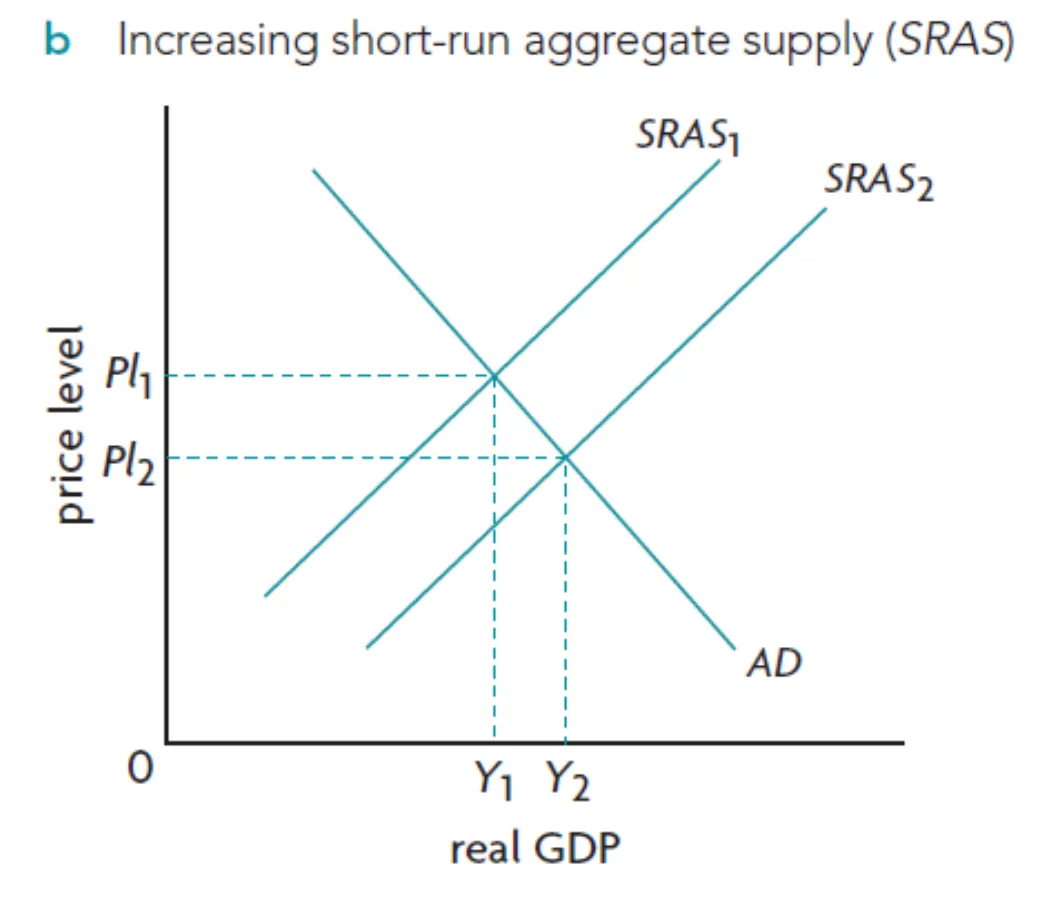
- SRAS 增加导致的 deflation = “good deflation”
- 例如:生产效率提高、生产成本下降
- SRAS 向右移动
- Price level 下降
- Real GDP 从 Y₁ 增加到 Y₂
- 结果:
- output 上升
- income 上升
- employment 上升
- economic growth
- 例子:19世纪后期的英国和美国
-
- 但是重点:no deflation is ever truly good
- 即使是 supply-side improvement 导致的价格下降,也可能有问题
- 因为 deflation 会让人们推迟消费:
- “反正以后更便宜,那我现在不买”
- Spending 下降 → AD 下降 → 经济变差
- decrease in AD
- Costs of deflation
- Redistribution effects
- 和 inflation 完全相反
- 在 deflation 中获益的人
- fixed income earners(固定收入者)
- holders of cash(持有现金的人)
- savers(储蓄者)
- lenders / creditors(债权人)
- 原因
- price level 下跌
- money 的 purchasing power 上升
- 同样的钱可以买更多东西
- → real value increases
- 在 deflation 中受损的人
- borrowers / debtors(借款人)
- payers of fixed incomes(支付固定收入的人)
- 原因
- 他们偿还的钱的 real value 变高
- 债务“越来越重”
- Increase in the real value of debt
- 如果你持有 $1000:
- deflation 后可以买更多东西
- → 你的 money real value increases
- 但如果你欠 $1000:
- 你未来偿还的 $1000 更“值钱”
- → debt burden increases
- 所以:
- deflation 对 debtors 很危险
- 容易导致:
- bankruptcies
- loan defaults
- financial stress
- 如果你持有 $1000:
- Uncertainty
- Deflation 和 inflation 一样:
- 都会制造 uncertainty
- Firms 难以预测:
- future costs
- future revenues
- future prices
- 因此企业可能:
- 减少 investment
- 减少 hiring
- 推迟 expansion
- 最终可能拖慢经济增长 📉
- Deflation 和 inflation 一样:
- Deferred(推迟) consumption, high and increasing cyclical unemployment; risk of a deflationary spiral
- Deferred consumption推迟消费
- 因为他们觉得价格还会继续下降
- 心理是:“现在买亏了,等等更便宜”
- deflation减少spending
- 消费者少花钱
- 企业也不愿借钱和投资
- 因为债务的 real value 上升,借钱更贵、更危险
- 结果:AD 下降
- Consumer spending ↓
- Business spending ↓
- Aggregate demand ↓
- AD 下降带来的后果
- Real GDP 下降
- Cyclical unemployment 上升
- Income 下降
- Price level 继续下降
- 形成 deflationary spiral(通缩螺旋)
- 价格下降 → 人们推迟消费
- 消费下降 → AD 下降
- GDP 下降 → 失业上升
- 收入下降 → 消费更少
- 价格继续下降
- 然后循环恶化
- Deferred consumption推迟消费
- Risk of bankruptcies and a financial crisis
-
- Deflation 会让 debt 的 real value 上升
- 欠的钱“实际变得更贵”
- 还债压力变大 debt burden增加
- 如果经济同时处于 recession
- incomes 下降
- firms 和 consumers 收入减少
- 但 debt burden 反而上升
- 结果:更容易破产
- 企业还不起债 → bankruptcy
- 消费者还不起贷款 → bankruptcy/default
-
- Redistribution effects
- Summing up deflation
- Deflation 很危险,因为它会导致
- high cyclical unemployment
- deflationary spiral
- financial crisis
- 而且 deflation 很难解决
- 一旦 people 开始推迟消费
- AD 会持续下降
- 经济容易不断恶化
- 所以 governments 更喜欢
- low and stable inflation
- 通常 target around 2% inflation
- 不会太高
- 也不会太接近 deflation
- A positive effect of deflation
- 会提高 international competitiveness
- 原因
- 国内 price level 下降
- 本国产品变得更便宜
- 结果
- exports ↑
- 外国人更愿意购买本国产品
- imports ↓
- 国内消费者更倾向买更便宜的本国产品
- net exports (X − M) ↑
- aggregate demand ↑
- real GDP ↑
- 但这个好处通常不足以抵消 deflation 的危险
- 因为 deflation 仍然可能导致
- deferred(推迟,延后) consumption
- unemployment
- deflationary spiral
- financial crisis
- exports ↑
- Deflation 很危险,因为它会导致