macro / ch 9
9.4Aggregate supply and equilibrium in the Keynesian model
Getting stuck in the short run
- Wage and price downward inflexibility
- 不会轻易下降
- under economic expansion and strong AD(rightward shifts in the AD curve causing inflationary gap)
- unemployment lower than the natural rate and a rising price level
- wages quickly begin to move upward
- yet, in a recessionary gap, where AD is weak and the economy is in recession with unemployment greater than the natural rate
- wages do not fall easily(even over long periods of time), due to
- labour contracts
- minimum wage
- worker and union resistance to wage cuts
- employer resistance due to morale
- prices also do not fall easily
- if wages will not go down, firms will avoid lowering their prices because that would reduce their profits
- large oligopolistics may fear price wars
- wages do not fall easily(even over long periods of time), due to
- The inability of the economy to move into the long run
- if wages and prices do not fall easily, this means that the economy will stuck in the short run
- in the Keynesian model, inflexible wages and prices in the downward direction mean that the economy cannot move into the long run when experiencing a deflationary gap(prices cannot fall).
- Because prices do not fall easily, wages do not fall (this means that the SRAS will not move)
- The shape of the Keynesian aggregate supply curve
-
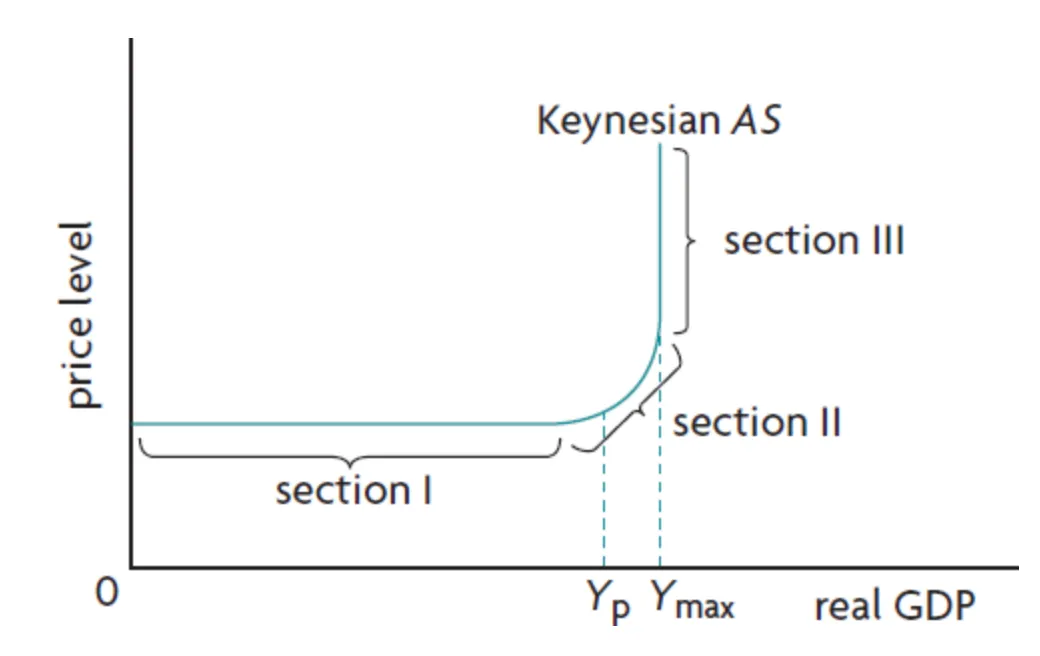
- Yp -> full employment level of real GDP/output, potential output level, unemployment is equal to the natural nate of unemployment
- it is not the maximum employment, as unemployment can fall further, which happens when real GDP continues to increase beyond Yp
- real GDP can continue to increase until it reaches section III
- Yp -> full employment level of real GDP/output, potential output level, unemployment is equal to the natural nate of unemployment
- section I
- real GDP is low
- price level remains constant as real GDP increases
- lot of unemployment of resources and spare capacity
- firms can easily increase their output by employing the unemployed capital and other unemployed resources, without having to bid up wages and other resource prices
- section II
- real GDP increases are accompanied by increases in the price level
- as output increases, so does employment of resources, and eventually bottlenecks in resource supplies begin to appear as there is no longer spare capacity in the economy
- wages and other resource prices begin to rise, costs of production increase
- leading to increase in price level, that’s the only way firms can increase output.
- section III
- AS becomes vertical at Ymax
- real GDP level reaches a level beyond which it cannot increase anymore
- the price level is rising rapidly at this point
- real GDP can no longer increase because firms are using the maximum amount of labour and all other resources
- any efforts to increase their output only result in greater increases in the price level
-
- The three equilibrium states of the economy in the Keynesian model
-
recessionary/deflationary/negative output gap
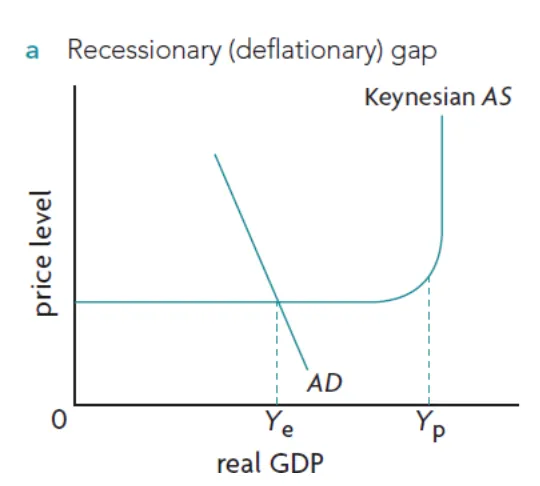
- AD curve intersecting the AS curve in its horizontal section, at Ye , which is less than Yp (potential GDP), indicating a deflationary (recessionary) gap with unemployment greater than the natural rate. Aggregate demand is too weak to induce firms to produce at Yp.
-
inflationary/positive output gap
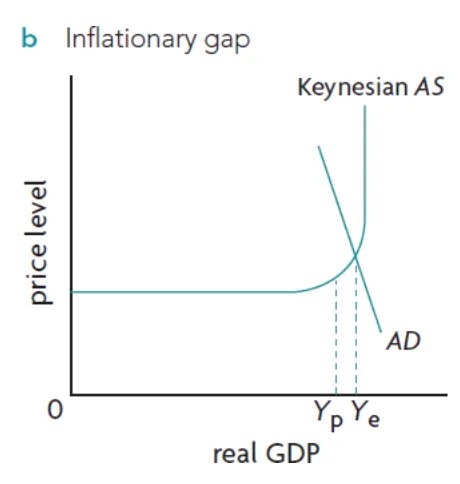
- the economy is producing at Ye , which is greater than Yp, and is experiencing an inflationary gap. There is strong(excess) aggregate demand, unemployment has fallen below its natural rate, and as the economy approaches its maximum capacity, the price level has increased.
-
full employment equilibrium (Ye = Yp)
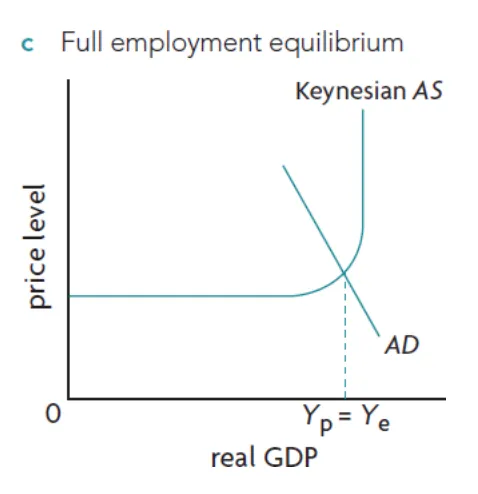
- the economy has achieved full employment equilibrium, or potential output, at Yp = Ye.
-
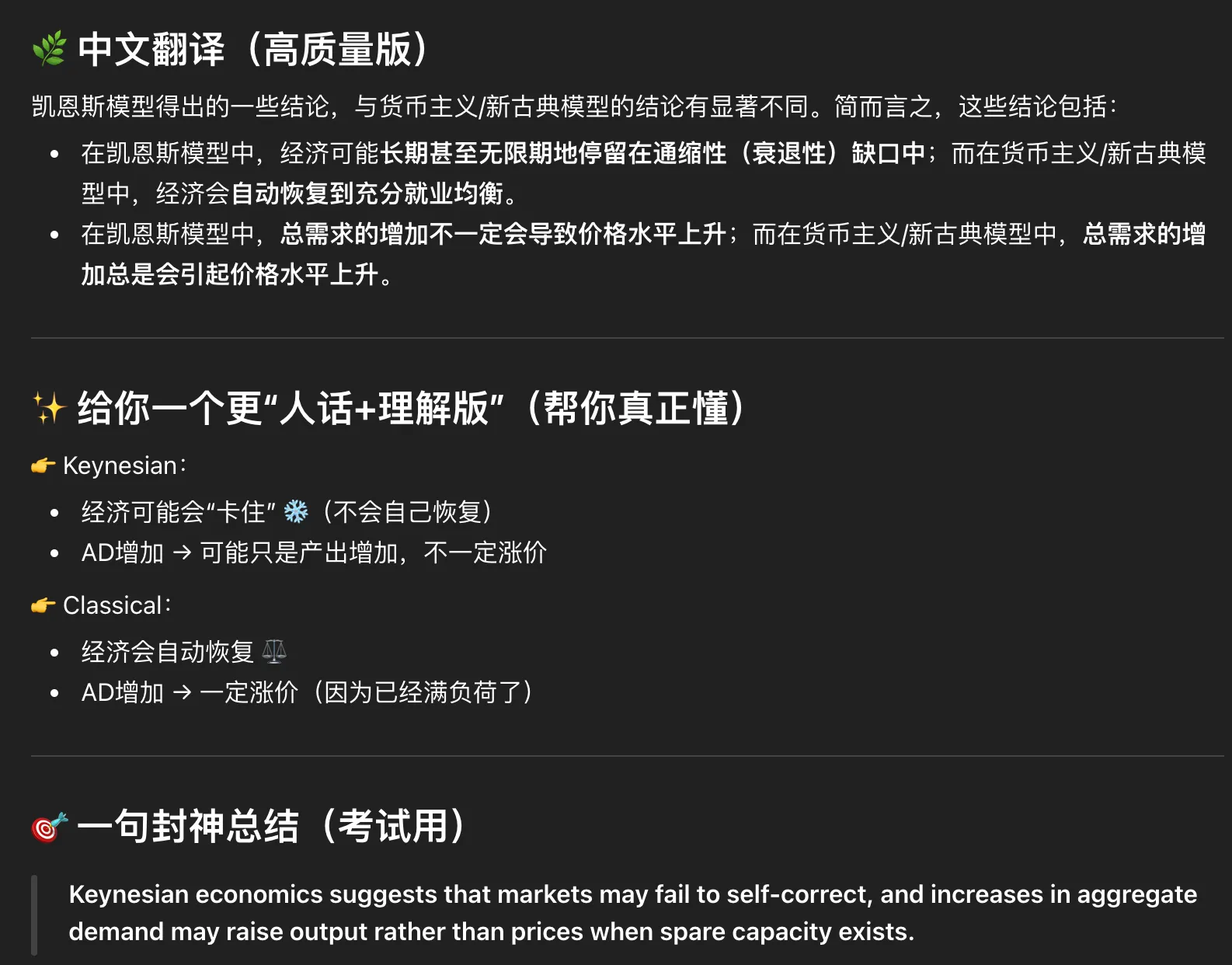
- When spare capacity exists, firms can increase output by utilising idle resources without increasing costs, so prices do not necessarily rise.
-