macro / ch 9
9.6Implications of the Keynesian model and the monetarist/new classical model
Automatic self-correction versus presistence of deflationary gaps over long periods of time
- monetarist/new classical model, which automatically corrects deflationary/recessionary gaps by returning to full employment equilibrium, the Keynesian model shows that an economy can remain for long periods of time in an equilibrium where there is less than full employment, caused by insufficient aggregate demand
- monetarist/new classical model
- governments should try to make markets work as freely as possible, so that wages and product prices can respond to the forces of demand and supply, without government intervention.
- Keynesian model
- the government must intervene in the economy with specific measures to help in come out of the deflationary gap
Increases in aggregate demand need not cause increases in the price level
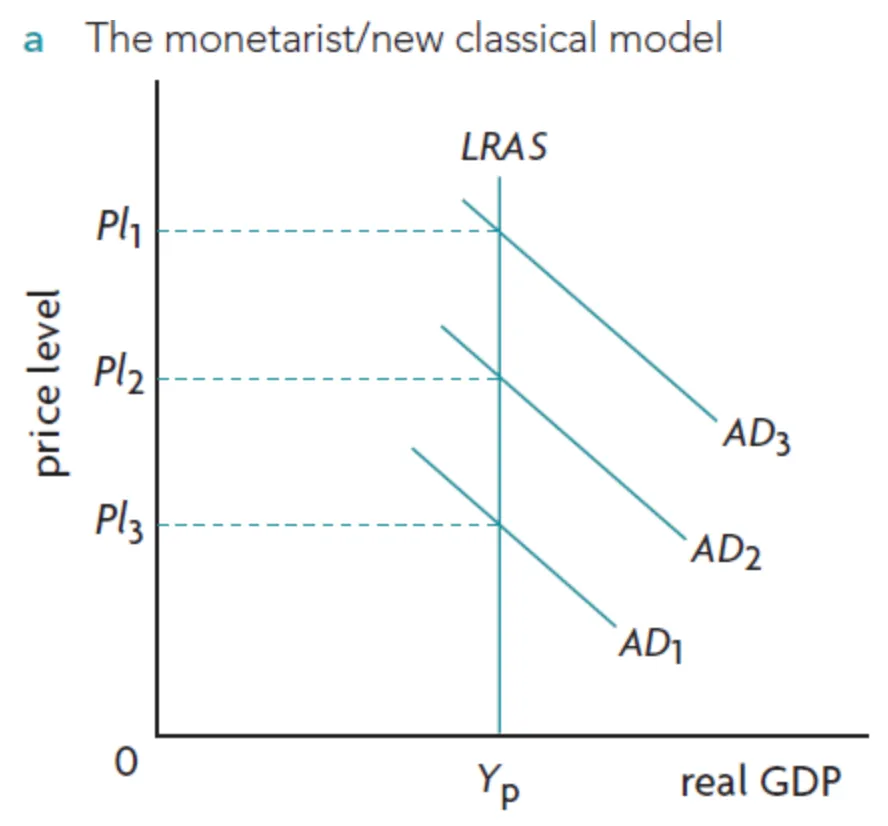
- monetarist/new classical model
- increases in AD always results in price level increases
-
- Keynesian model
- increases in AD lead to increases in real GDP without affecting the price level
-
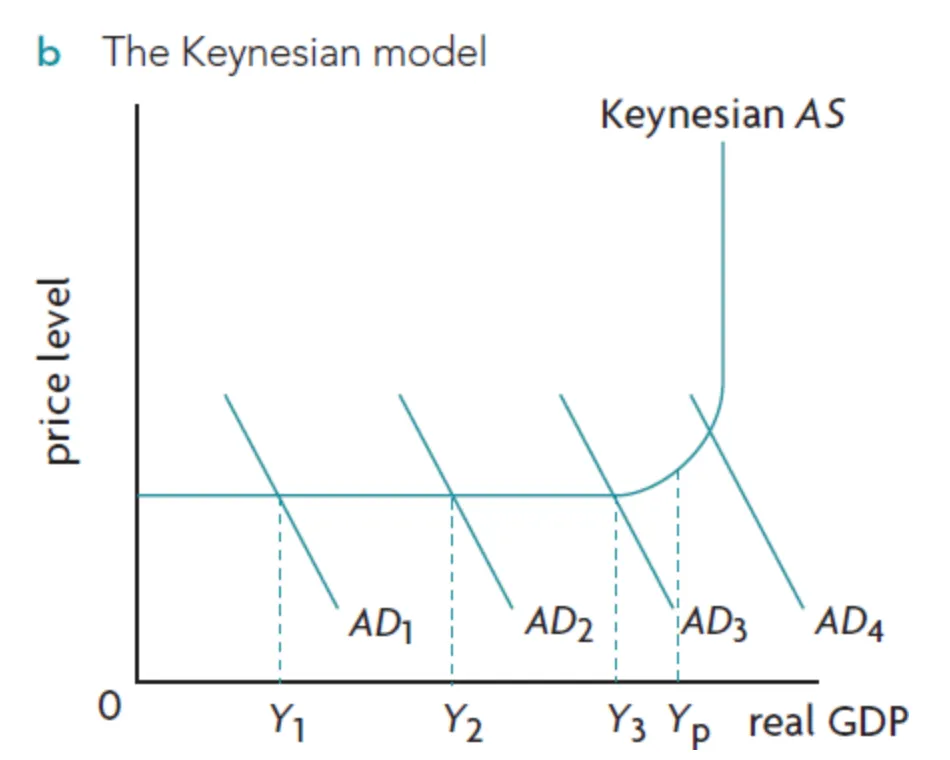
- the AS curve begins to slope upward, when it is close to the full employment level of output, that further increases in AD begin to result in changes in the price level as well
- when the AS curve becomes vertical, increases in AD result in rapid price level increases while leaving real GDP unchanged