micro
Market failure and public goods
public goods
- non-rivalrous
- consumption by one person does not reduce the availability for someone else
- non-excludable
- it is not possible to exclude someone from using the good, even if the person does not pay for it
- eg. national defense, lighthouse
Free-rider problem
- people could not be prevented from using it even though they would not pay for it, for a public good
- no profit-maximizing private firms would be willing to produce a good it cannot sell at some price
- as a result, the market fails to produce goods that are non-excludable, giving rise to resource misallocation, as no resources are allocated to the production of public goods
-

- The free rider problem occurs when individuals benefit from a public good without paying for it, because public goods are non-excludable and non-rivalrous. Since people can enjoy the good regardless of whether they contribute, many choose not to pay and instead “free ride” on others’ contributions. As a result, the public good is under-provided or not provided at all, even though everyone would benefit if all contributed.
Government intervention to correct the market’s failure to provide public goods
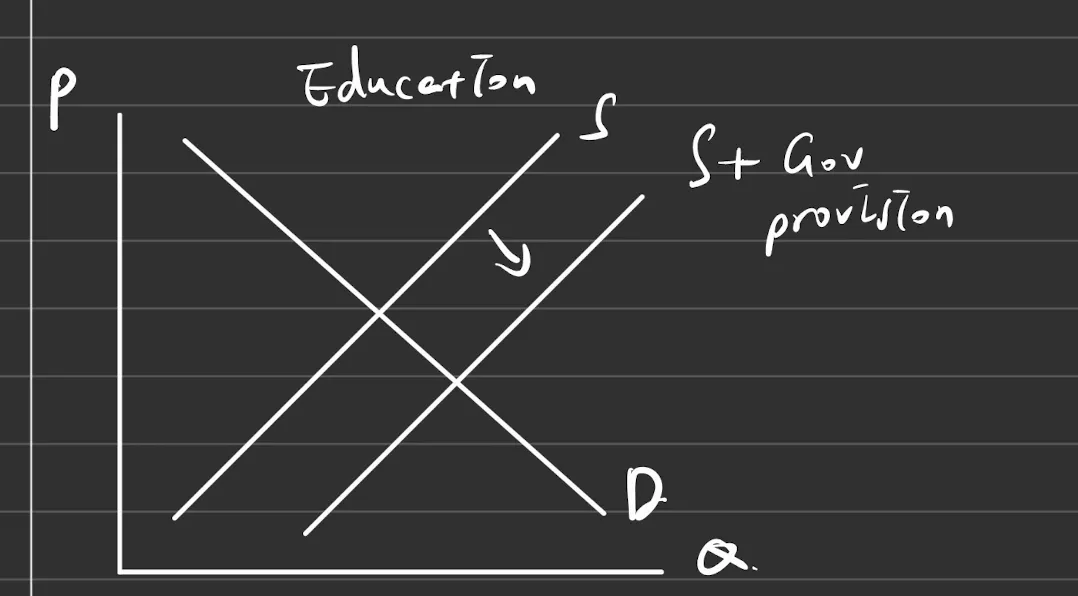
- Direct government provision
- occurs when the government directly supplies certain goods or services to the public
-
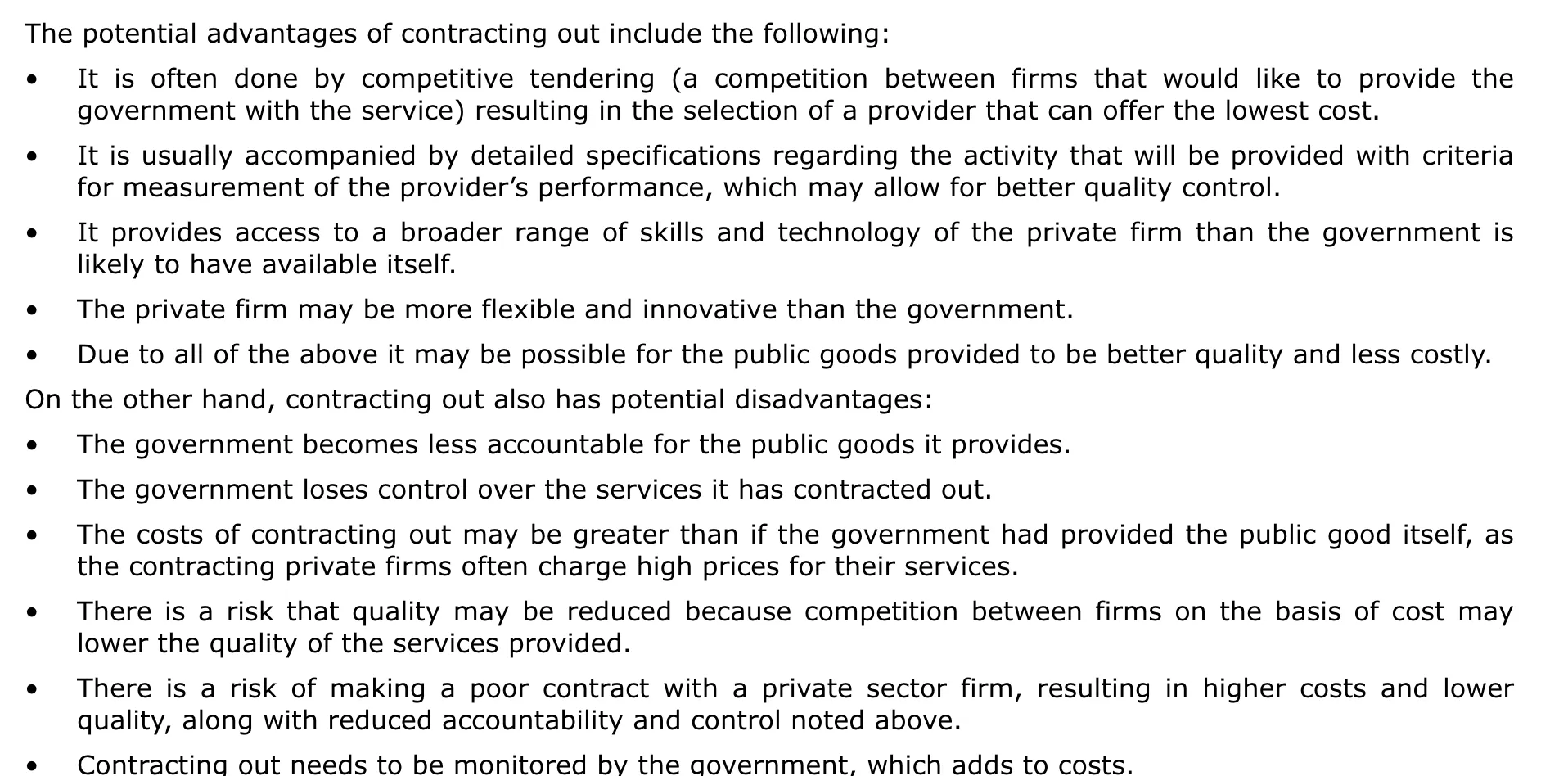
- Contracting out(外包)
- occurs when the government pays a specialist private producer with the expertise(专业技能) to produce public good
- 在 contracting out(外包) 的过程中,政府通常会通过 competitive tendering(竞争性招标),并倾向于选择报价最低、同时满足基本质量标准的 firm。
-
- occurs when the government pays a specialist private producer with the expertise(专业技能) to produce public good